The best comebacks to “you’re so dramatic” are witty, confident, and perfectly timed. Whether someone is teasing you, dismissing your feelings, or being sarcastic, the right response can turn an awkward moment into a hilarious one.
Ever shared your feelings, reacted to unexpected news, or explained something passionately, only to hear, “You’re so dramatic”? Well, congratulations! Apparently, having emotions is now a full-time performance. Whether someone says it during a friendly argument, in a text message, at work, or while teasing you in front of friends, that little comment can catch you off guard.
Sometimes it’s harmless teasing, but other times it feels like someone is dismissing your feelings. That’s where the perfect comeback comes in. The best comebacks to “you’re so dramatic” help you respond with humor, confidence, or just the right amount of attitude. Whether you want to make everyone laugh, shut down unnecessary comments, or flirt your way out of the moment, these replies have you covered. Choose your favorite and let your personality do the talking!
1. Funny Comebacks to “You’re So Dramatic”
Sometimes laughter is the best response. These funny replies turn the comment into a moment everyone can enjoy.
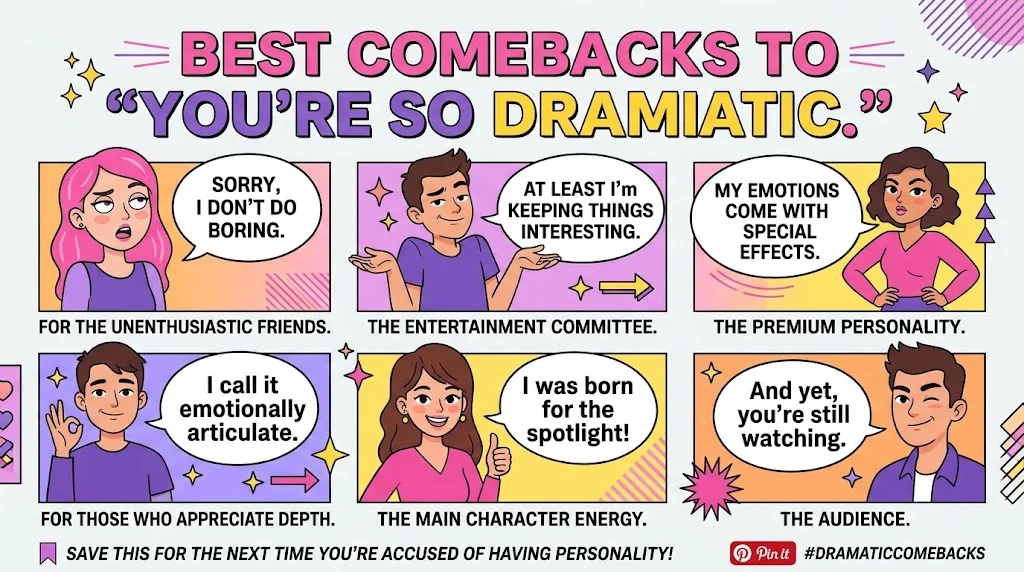
- I’m just giving this moment the attention it deserves.
Example: When friends tease you about your reaction.
Meaning: You believe the situation deserves your energy. - Sorry, my personality comes with special effects.
Example: When someone laughs at your expressive reaction.
Meaning: You embrace your entertaining personality. - I was born for the spotlight.
Example: When someone calls you dramatic in a group.
Meaning: You enjoy being expressive and entertaining. - At least I’m keeping things interesting.
Example: When someone complains about your reactions.
Meaning: You see yourself as the fun one. - It’s called premium entertainment.
Example: When friends tease you during a funny moment.
Meaning: You turn their criticism into a joke. - I don’t do boring reactions.
Example: When someone questions your excitement.
Meaning: You prefer expressing yourself freely. - Someone has to make life interesting.
Example: During a playful conversation.
Meaning: You enjoy bringing energy into ordinary situations. - My emotions deserve a standing ovation.
Example: When someone exaggerates your emotional reaction.
Meaning: You humorously celebrate your feelings. - This is only the trailer.
Example: When friends jokingly call you dramatic.
Meaning: You’re playfully suggesting there’s more entertainment ahead. - I call it expressive storytelling.
Example: When explaining an exciting experience.
Meaning: You consider your reactions part of your storytelling. - Sorry, I forgot to bring my boring personality.
Example: When someone teases your enthusiasm.
Meaning: You proudly embrace your lively nature. - Drama follows me because I’m the main character.
Example: When friends joke about your reactions.
Meaning: You confidently make yourself the center of the joke.
2. Sarcastic Comebacks to “You’re So Dramatic”
A little sarcasm can make your response unforgettable. Use these when someone is clearly teasing you.
- Wow, what an original observation.
Example: When someone repeatedly makes the same comment.
Meaning: You sarcastically question their creativity. - Thank you for your professional analysis.
Example: When someone comments unnecessarily on your behavior.
Meaning: You mock their unsolicited opinion. - I’ll try to be less entertaining next time.
Example: During playful teasing with friends.
Meaning: You sarcastically suggest they dislike your personality. - And you’re an expert on everything, apparently.
Example: When someone acts overly judgmental.
Meaning: You challenge their superior attitude. - Should I submit a formal apology?
Example: When someone exaggerates your reaction.
Meaning: You highlight how unnecessary their criticism feels. - Oh no, my reputation is ruined.
Example: When someone playfully criticizes you.
Meaning: You pretend to be dramatically offended. - I’ll add that to my list of concerns.
Example: When you don’t take their comment seriously.
Meaning: You dismiss their unnecessary observation. - What would I do without your feedback?
Example: When someone keeps commenting on your behavior.
Meaning: You sarcastically express your lack of interest. - Thank you, Captain Obvious.
Example: When someone states something painfully obvious.
Meaning: You make fun of their unnecessary observation. - I’ll alert the media immediately.
Example: When someone makes a big deal about your reaction.
Meaning: You exaggerate the importance of their comment. - Please, tell me more about my personality.
Example: When someone acts like they know you better than yourself.
Meaning: You question their assumptions. - Your opinion has been received and filed under unnecessary.
Example: When someone gives unwanted criticism.
Meaning: You confidently reject their judgment.
3. Brutal Comebacks to “You’re So Dramatic”
When someone repeatedly dismisses your feelings, a firm response can make your boundaries clear.
- I’m expressive, you’re just emotionally unavailable.
Example: When someone constantly dismisses your emotions.
Meaning: You point out their lack of emotional understanding. - At least I have something to feel strongly about.
Example: During a heated disagreement.
Meaning: You defend your emotional involvement. - My feelings aren’t your entertainment.
Example: When someone makes fun of your genuine emotions.
Meaning: You demand basic emotional respect. - You confuse honesty with drama.
Example: When someone dislikes your straightforward reactions.
Meaning: You defend your willingness to speak openly. - Maybe you’re just uncomfortable with real emotions.
Example: When someone dismisses your concerns.
Meaning: You challenge their emotional avoidance. - Not everything revolves around your comfort.
Example: When someone expects you to hide your feelings.
Meaning: You establish personal boundaries. - I’m not changing my personality to make you comfortable.
Example: When someone repeatedly criticizes your reactions.
Meaning: You stand up for yourself. - You call it drama because you don’t want accountability.
Example: During an argument about someone’s behavior.
Meaning: You challenge their attempt to avoid responsibility. - My reaction isn’t the problem. Your behavior is.
Example: When someone focuses on your response instead of their actions.
Meaning: You redirect attention toward the actual issue. - I don’t need your permission to have feelings.
Example: When someone tells you to calm down.
Meaning: You defend your emotional independence. - Being dismissive doesn’t make you reasonable.
Example: When someone acts superior during disagreements.
Meaning: You challenge their attitude. - If honesty feels dramatic, that’s your problem.
Example: When someone dislikes hearing the truth.
Meaning: You refuse to apologize for being honest.
4. Clever Comebacks to “You’re So Dramatic”
Want a reply that makes someone pause and smile? These clever responses deliver just the right amount of wit.
- Every story needs a little character development.
Example: When someone comments on your reaction.
Meaning: You turn your behavior into a playful story. - I’m simply adding emotional depth to the situation.
Example: When discussing something passionately.
Meaning: You describe your expressiveness intelligently. - You mistake personality for performance.
Example: When someone misunderstands your natural behavior.
Meaning: You distinguish authenticity from exaggeration. - Someone has to keep the plot moving.
Example: When friends tease you about your reactions.
Meaning: You humorously position yourself as the entertainment. - It’s called having a personality.
Example: When someone criticizes your enthusiasm.
Meaning: You confidently defend your individuality. - I’m not dramatic, I’m detail-oriented emotionally.
Example: When someone questions your emotional response.
Meaning: You humorously describe your attention to feelings. - My reactions come with context.
Example: When someone judges your response without understanding the situation.
Meaning: You remind them that circumstances matter. - I believe in giving every moment its proper soundtrack.
Example: When reacting enthusiastically to something.
Meaning: You embrace your expressive side. - That’s one interpretation of emotional intelligence.
Example: When someone labels your feelings as drama.
Meaning: You challenge their limited perspective. - I’m not overreacting; I’m providing additional information.
Example: During a playful disagreement.
Meaning: You humorously justify your reaction. - My personality doesn’t come with a volume control.
Example: When someone comments on your enthusiasm.
Meaning: You accept your naturally expressive personality. - I prefer the term emotionally articulate.
Example: When someone calls you dramatic during a conversation.
Meaning: You reframe the criticism positively.
5. Confident Comebacks to “You’re So Dramatic”
Confidence is attractive, especially when you refuse to let unnecessary comments define you.
- I’m comfortable being exactly who I am.
Example: When someone criticizes your personality.
Meaning: You confidently accept yourself. - I don’t apologize for expressing myself.
Example: When someone questions your emotional reactions.
Meaning: You stand behind your feelings. - That’s your opinion, not my identity.
Example: When someone labels your personality.
Meaning: You refuse to accept someone else’s judgment. - I know who I am, and I’m good with it.
Example: When someone tries to make you feel embarrassed.
Meaning: You demonstrate self-assurance. - Being expressive is not a weakness.
Example: When someone mocks your emotional side.
Meaning: You recognize emotional expression as a strength. - I don’t need to be less to make you comfortable.
Example: When someone expects you to tone yourself down.
Meaning: You refuse to shrink your personality. - I’m allowed to react to what happens.
Example: When someone questions your response.
Meaning: You defend your right to express yourself. - My personality isn’t up for debate.
Example: When someone repeatedly criticizes you.
Meaning: You establish confidence and boundaries. - I would rather be authentic than agreeable.
Example: When someone dislikes your honest reactions.
Meaning: You prioritize authenticity over approval. - You don’t have to understand me to respect me.
Example: When someone dismisses your personality.
Meaning: You expect respect without demanding agreement. - I like the way I express myself.
Example: When someone makes fun of your enthusiasm.
Meaning: You show healthy self-acceptance. - I’m not here to meet everyone’s expectations.
Example: When someone judges your behavior.
Meaning: You confidently prioritize your individuality.
6. Flirty Comebacks to “You’re So Dramatic”
When your crush or partner calls you dramatic, turn the moment into playful flirting.
- Only because you bring out my dramatic side.
Example: When your crush teases your reactions.
Meaning: You playfully suggest they affect your emotions. - You haven’t even seen me fall in love yet.
Example: During a flirty conversation.
Meaning: You hint at your romantic feelings. - Someone has to make you smile.
Example: When your partner jokes about your behavior.
Meaning: You suggest your personality makes their day better. - I’m only dramatic when you’re around.
Example: When flirting over text.
Meaning: You make the other person feel special. - And yet you find me entertaining.
Example: When someone playfully teases you.
Meaning: You turn their criticism into flirtation. - What can I say? I like your attention.
Example: When your crush notices your reactions.
Meaning: You openly enjoy their attention. - Wait until you see my romantic side.
Example: When exchanging playful messages.
Meaning: You hint at your affectionate personality. - You make my heart act differently.
Example: When your crush calls you dramatic.
Meaning: You suggest they make you nervous or excited. - It’s your fault for being so distracting.
Example: When someone catches you acting excited around them.
Meaning: You flirt by blaming them for your reactions. - I save my best performances for you.
Example: During playful romantic teasing.
Meaning: You make them feel uniquely important. - You love the attention, admit it.
Example: When your partner jokes about your personality.
Meaning: You playfully suggest they enjoy your energy. - Maybe I’m just trying to impress you.
Example: When flirting with someone you like.
Meaning: You reveal your interest in a charming way.
7. Polite Comebacks to “You’re So Dramatic”
Not every situation needs sarcasm. These respectful replies help you communicate without creating unnecessary tension.
- I simply express things differently.
Example: When someone comments on your reaction.
Meaning: You acknowledge your different communication style. - I understand why you might see it that way.
Example: During a disagreement with a friend.
Meaning: You recognize their perspective without agreeing. - I’m just being honest about how I feel.
Example: When someone questions your emotional response.
Meaning: You calmly explain your intentions. - I didn’t mean to make it seem that way.
Example: When your reaction causes confusion.
Meaning: You clarify your intentions politely. - I think my feelings deserve to be heard too.
Example: When someone dismisses your concerns.
Meaning: You politely request understanding. - We may simply see things differently.
Example: When discussing a sensitive subject.
Meaning: You accept differences in perspective. - I’m passionate about things that matter to me.
Example: When someone questions your enthusiasm.
Meaning: You explain your emotional investment. - I appreciate your opinion, but I disagree.
Example: When someone makes an unfair judgment.
Meaning: You disagree without being disrespectful. - I would rather talk about the actual issue.
Example: When someone avoids discussing the problem.
Meaning: You redirect the conversation constructively. - Let’s focus on what happened instead.
Example: During an argument with someone close.
Meaning: You encourage a more productive discussion. - I’m expressing something that’s important to me.
Example: When explaining a personal concern.
Meaning: You communicate the importance of your feelings. - I hope you can understand where I’m coming from.
Example: When trying to resolve a misunderstanding.
Meaning: You invite empathy and understanding.
8. Short and Witty Comebacks to “You’re So Dramatic”
Sometimes one short sentence is all you need. These quick replies work perfectly in texts, comments, and everyday conversations.
- It’s called range.
Example: When someone jokes about your reactions.
Meaning: You celebrate your expressive personality. - Born this expressive.
Example: When friends tease your behavior.
Meaning: You accept your natural personality. - Stay tuned.
Example: When someone expects another dramatic reaction.
Meaning: You playfully suggest more entertainment is coming. - And proud of it.
Example: When someone labels you dramatic.
Meaning: You confidently own your personality. - It’s my specialty.
Example: During a playful conversation.
Meaning: You turn the comment into a compliment. - No refunds.
Example: When someone jokes about your personality.
Meaning: You humorously suggest you’re not changing. - That’s the charm.
Example: When someone teases your enthusiasm.
Meaning: You see your expressiveness as appealing. - Guilty as charged.
Example: When someone jokingly calls you dramatic.
Meaning: You playfully admit the accusation. - Naturally talented.
Example: When someone laughs at your reaction.
Meaning: You confidently embrace your personality. - It’s a lifestyle.
Example: When friends comment on your behavior.
Meaning: You suggest being expressive is part of who you are. - Just getting started.
Example: When someone jokes about your dramatic reaction.
Meaning: You humorously promise more excitement. - Respect the artistry.
Example: When someone questions your expressive storytelling.
Meaning: You treat your reactions like a creative talent.
9. Dramatic Comebacks to “You’re So Dramatic”
If they call you dramatic, why not give them a little theatrical performance?
- Finally, someone recognizes my talent.
Example: When friends tease your exaggerated reactions.
Meaning: You pretend their comment is recognition. - I was waiting for my award ceremony.
Example: During a playful group conversation.
Meaning: You humorously celebrate your performance. - The audience deserves nothing less.
Example: When someone jokes about your storytelling.
Meaning: You embrace the entertainment. - Please hold your applause until the end.
Example: When someone laughs at your reaction.
Meaning: You pretend you’re performing on stage. - I didn’t choose the drama; the drama chose me.
Example: When friends tease your personality.
Meaning: You jokingly suggest drama is your natural talent. - This scene requires emotional excellence.
Example: When explaining something exciting.
Meaning: You make your reaction sound theatrical. - Where’s my director? I need another take.
Example: When someone comments on your dramatic expression.
Meaning: You compare your reaction to a movie scene. - My life needs a soundtrack.
Example: When describing a memorable experience.
Meaning: You enjoy adding theatrical energy to everyday life. - I’m simply following the script.
Example: When someone teases your reaction.
Meaning: You pretend your behavior is carefully planned. - This deserves an entire season.
Example: When discussing a complicated situation.
Meaning: You exaggerate the importance of the story. - Oscar-worthy behavior, thank you very much.
Example: When friends laugh at your performance.
Meaning: You jokingly praise your acting skills. - The plot thickens, darling.
Example: When someone expects you to stop talking.
Meaning: You playfully keep the excitement alive.
10. Chill and Casual Comebacks to “You’re So Dramatic”
Keep things relaxed with these effortless responses. They’re ideal for friends, siblings, and casual conversations.
- Maybe a little, what’s the problem?
Example: When someone casually teases you.
Meaning: You acknowledge the comment without taking offense. - That’s just how I am.
Example: When someone comments on your personality.
Meaning: You accept yourself naturally. - I like keeping things interesting.
Example: When friends joke about your reactions.
Meaning: You enjoy bringing energy into conversations. - Don’t worry, I’ll survive.
Example: When someone exaggerates your reaction.
Meaning: You respond with lighthearted humor. - It’s not that serious, I promise.
Example: When your reaction gets misunderstood.
Meaning: You reassure the other person. - I just have big reactions.
Example: When someone questions your excitement.
Meaning: You explain your expressive nature casually. - Well, that’s one way to describe me.
Example: When someone labels your personality.
Meaning: You avoid taking their comment personally. - Can’t help it sometimes.
Example: When reacting emotionally to something unexpected.
Meaning: You acknowledge your natural response. - At least we’re not bored.
Example: When friends tease your enthusiasm.
Meaning: You turn the situation into a joke. - Just enjoying the moment.
Example: When someone questions your excitement.
Meaning: You explain that you’re simply having fun. - Fair enough, moving on.
Example: When you don’t want a disagreement.
Meaning: You choose not to prolong the discussion. - That’s today’s personality update.
Example: When someone comments on your behavior.
Meaning: You make light of your changing moods.
11. Professional Comebacks to “You’re So Dramatic”
At work or in formal situations, confidence and professionalism matter more than winning an argument.
- I’m emphasizing something I believe is important.
Example: During a workplace discussion.
Meaning: You explain the seriousness of your response. - I believe the concern deserves proper attention.
Example: When a colleague dismisses your concerns.
Meaning: You redirect attention toward the issue. - Let’s focus on the facts rather than my reaction.
Example: During a professional disagreement.
Meaning: You encourage objective discussion. - I’m communicating my concerns clearly.
Example: When someone questions your communication style.
Meaning: You defend your professional approach. - I would appreciate keeping the discussion constructive.
Example: When a colleague makes personal remarks.
Meaning: You encourage respectful communication. - My intention is to address the issue, not create conflict.
Example: During a workplace disagreement.
Meaning: You clarify your professional intentions. - I think we should consider the underlying concern.
Example: When someone dismisses your complaint.
Meaning: You bring the conversation back to the real problem. - I’m simply advocating for a reasonable solution.
Example: When someone criticizes your persistence.
Meaning: You demonstrate commitment to problem-solving. - Different perspectives should be discussed respectfully.
Example: During a team meeting.
Meaning: You encourage professional understanding. - I would prefer we address the matter directly.
Example: When someone makes personal comments.
Meaning: You discourage unnecessary distractions. - Expressing concern is part of responsible communication.
Example: When raising a workplace issue.
Meaning: You defend your right to communicate concerns. - Let’s separate personal opinions from the actual discussion.
Example: During a tense professional conversation.
Meaning: You maintain a productive and respectful environment.
12. Cute Comebacks to “You’re So Dramatic”
Want something adorable instead of argumentative? These sweet responses add personality without creating tension.
- I’m just a little extra adorable.
Example: When someone affectionately teases you.
Meaning: You respond with playful self-confidence. - That’s what makes me lovable.
Example: When your partner jokes about your reactions.
Meaning: You suggest your personality is part of your charm. - I come with unlimited emotions.
Example: During a sweet conversation.
Meaning: You proudly embrace your emotional side. - You wouldn’t want me any other way.
Example: When someone close teases you.
Meaning: You playfully remind them of your charm. - I’m just adding a little sparkle.
Example: When friends comment on your enthusiasm.
Meaning: You bring positivity into ordinary moments. - My heart is just very expressive.
Example: When someone notices your emotional reaction.
Meaning: You explain your sensitivity sweetly. - It’s part of my adorable package.
Example: When flirting with your partner.
Meaning: You present your personality as something lovable. - A little drama, a lot of love.
Example: When someone jokes about your personality.
Meaning: You highlight your affectionate nature. - I just feel everything with extra sparkle.
Example: When discussing your emotions.
Meaning: You embrace your sensitivity positively. - You secretly enjoy it.
Example: When your partner teases you.
Meaning: You playfully suggest they love your personality. - I’m your favorite little drama queen.
Example: During affectionate teasing.
Meaning: You turn the comment into a cute nickname. - That’s because my heart has a big personality.
Example: When someone notices your strong reactions.
Meaning: You describe your emotional nature affectionately.
13. Emotional Comebacks to “You’re So Dramatic”
Sometimes the comment hurts because you’re genuinely trying to express something important. These replies communicate your feelings honestly.
- I’m not being dramatic; I’m trying to be understood.
Example: When someone dismisses your concerns.
Meaning: You want emotional understanding rather than judgment. - It hurts when you minimize how I feel.
Example: During a serious conversation with someone close.
Meaning: You explain the emotional impact of their words. - I wish you would listen before judging my reaction.
Example: When someone interrupts your explanation.
Meaning: You request patience and understanding. - My feelings are real, even if you don’t understand them.
Example: When someone questions your emotions.
Meaning: You validate your own emotional experience. - I’m asking for understanding, not an argument.
Example: When discussing a sensitive issue.
Meaning: You want connection instead of conflict. - Sometimes I react strongly because something matters deeply.
Example: When explaining an emotional response.
Meaning: You reveal the importance behind your reaction. - I don’t always know how to explain what I’m feeling.
Example: When struggling to communicate your emotions.
Meaning: You express vulnerability. - Please don’t make me feel guilty for being honest.
Example: When someone criticizes your openness.
Meaning: You request emotional respect. - I need you to understand, not label me.
Example: During a disagreement with a loved one.
Meaning: You prioritize empathy over judgment. - I’m allowed to have difficult feelings.
Example: When someone expects you to stay calm.
Meaning: You acknowledge your emotional rights. - I wouldn’t react this way if it didn’t matter.
Example: When someone questions your concern.
Meaning: You explain your emotional investment. - Please take my feelings seriously.
Example: When someone repeatedly dismisses your concerns.
Meaning: You clearly communicate your need for respect.
14. Creative Comebacks to “You’re So Dramatic”
For something different, try these imaginative replies that make ordinary conversations more entertaining.
- My emotions have their own production team.
Example: When friends tease your reactions.
Meaning: You jokingly describe your expressive personality. - I’m running an award-winning emotional series.
Example: When someone comments on your storytelling.
Meaning: You compare your life to an entertaining show. - My personality comes with cinematic lighting.
Example: During a playful conversation.
Meaning: You embrace your theatrical personality. - This is an exclusive emotional experience.
Example: When someone laughs at your reaction.
Meaning: You present your behavior as something special. - I’m just adding subtitles to my feelings.
Example: When someone misunderstands your expression.
Meaning: You humorously suggest your emotions need explanation. - My inner narrator has a lot to say.
Example: When describing an everyday situation dramatically.
Meaning: You enjoy expressing your thoughts creatively. - I was designed for unforgettable moments.
Example: When friends tease your personality.
Meaning: You confidently celebrate your individuality. - Life is my stage, and I’m enjoying the role.
Example: When someone calls you dramatic.
Meaning: You embrace your expressive nature. - My reactions come with a director’s cut.
Example: When someone notices your detailed storytelling.
Meaning: You enjoy adding extra details. - I’m simply upgrading this conversation.
Example: During casual teasing.
Meaning: You turn your reaction into a playful compliment. - Even my silence has a backstory.
Example: When someone jokes about your expressions.
Meaning: You humorously suggest your emotions run deep. - My personality deserves its own documentary.
Example: When friends tease your behavior.
Meaning: You celebrate your uniqueness with humor.
15. Comebacks That Shut Down “You’re So Dramatic” Without Being Rude
When you want to end unnecessary comments without starting another argument, these balanced responses work beautifully.
- Let’s agree to see things differently.
Example: When a discussion becomes repetitive.
Meaning: You choose peace over unnecessary disagreement. - I don’t think labeling me helps this conversation.
Example: When someone repeatedly calls you dramatic.
Meaning: You discourage personal criticism. - I’d appreciate a little more understanding.
Example: When someone dismisses your feelings.
Meaning: You politely request empathy. - We can disagree without making it personal.
Example: During a disagreement with a friend.
Meaning: You encourage respectful communication. - I’m happy to discuss the issue, not my personality.
Example: When someone changes the subject to your behavior.
Meaning: You redirect attention toward the real concern. - Let’s not turn this into a personal judgment.
Example: When someone criticizes your reaction.
Meaning: You establish a respectful boundary. - I think we’ve made our points.
Example: When an argument goes nowhere.
Meaning: You politely end the discussion. - You don’t have to agree with me.
Example: When someone refuses to understand your perspective.
Meaning: You accept differences without seeking approval. - I know what I meant, and that’s enough for me.
Example: When someone misinterprets your reaction.
Meaning: You remain confident in your intentions. - Let’s leave the labels out of it.
Example: When someone makes personal remarks.
Meaning: You encourage a more respectful conversation. - I would rather be understood than judged.
Example: When expressing something personal.
Meaning: You prioritize empathy and communication. - Anyway, let’s move forward.
Example: When you want to end an unproductive exchange.
Meaning: You choose to move on peacefully.
FAQs About “You’re So Dramatic” and the Best Comebacks
What does “you’re so dramatic” mean?
It means someone thinks your reaction or emotions are exaggerated.
Is “you’re so dramatic” sometimes flirty?
Yes, it can be playful teasing when said affectionately by someone interested in you.
How do you respond professionally to “you’re so dramatic”?
Say, “I’m emphasizing a concern that deserves proper attention.”
What if you don’t mean to be dramatic?
Explain your feelings calmly and clarify what made you react that way.
Is humor appropriate when someone calls you dramatic?
Yes, when the situation is lighthearted and everyone understands the joke.
What is the best short comeback to “you’re so dramatic”?
Try “It’s called having a personality.” It’s confident, simple, and playful.
How do you respond when someone calls you dramatic during an argument?
Say, “Let’s focus on the actual issue instead of labeling my reaction.”
How do you respond when your crush calls you dramatic?
Try “Only because you bring out my dramatic side.”
Should you ignore someone who constantly calls you dramatic?
If they repeatedly dismiss your feelings, calmly establish boundaries or disengage.
How do you respond without sounding rude?
Say, “I simply express things differently, and that’s okay.”
Conclusion
Being called dramatic doesn’t mean you have to become defensive or explain every little emotion. Sometimes a funny comeback is enough to make everyone laugh, while other situations deserve a confident or thoughtful response. The secret is knowing your audience, understanding the situation, and choosing words that reflect your personality.
Whether you prefer witty one-liners, playful flirting, clever sarcasm, or polite boundaries, there’s a perfect response for every moment. Save your favorite comebacks to “you’re so dramatic” for the next unexpected comment. Share this list with your expressive friends, and remember: having a personality is never something you need to apologize for!