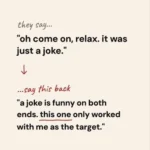
The best comebacks for “it’s just a joke” depend on whether you want to respond with humor, confidence, sarcasm, or maturity. A good reply can make your point without turning the situation into an unnecessary argument.
We’ve all experienced that awkward moment when someone makes a rude comment, notices we’re uncomfortable, and suddenly says, “It’s just a joke.” Apparently, adding those five words is supposed to make everything acceptable!
Whether it’s a friend teasing you, a coworker making an uncomfortable remark, someone being disrespectful in a group chat, or a crush hiding an insult behind humor, knowing what to say matters. Sometimes you want to laugh it off. Other times, you want a clever comeback that makes your point without creating unnecessary drama.
1. Funny Comebacks for “It’s Just a Joke”
Want to keep things light while making someone realize their joke didn’t land? These funny responses deliver the message with a little humor.
1. Then I guess the funny part is still loading.
Example: When a friend makes an awkward joke and expects everyone to laugh.
Meaning: You think their attempt at humor wasn’t successful.
2. Oh, I thought jokes were supposed to be funny.
Example: When someone makes a comment that feels more insulting than entertaining.
Meaning: You are questioning the quality of their humor.
3. Should I pretend to laugh, or are we being honest today?
Example: When someone expects you to laugh at an obviously rude remark.
Meaning: You refuse to fake a reaction.
4. Comedy called. It wants its standards back.
Example: When a friend makes a painfully unfunny joke.
Meaning: You are playfully criticizing their humor.
5. I must have missed the funny part.
Example: When someone makes an uncomfortable joke in a group.
Meaning: You aren’t convinced there was anything funny about it.
6. Was that the joke, or just the introduction?
Example: When someone delivers a weak punchline.
Meaning: You are teasing them about their attempt at comedy.
7. I’ll laugh when the joke arrives.
Example: When someone insists their comment was hilarious.
Meaning: You are refusing to give them an undeserved reaction.
8. My sense of humor is currently unavailable.
Example: When you want to dismiss an annoying comment casually.
Meaning: You aren’t interested in entertaining their joke.
9. Even my silence has better timing.
Example: When someone makes a joke and waits for your reaction.
Meaning: You are using humor to highlight their failed delivery.
10. That joke needs a little more development.
Example: When a friend makes an inappropriate comment and calls it comedy.
Meaning: You are suggesting they need to improve their humor.
11. Somewhere, a comedian just lost confidence.
Example: When someone makes an extremely weak joke.
Meaning: You are playfully pointing out how unfunny it was.
12. I’ll give that joke a participation award.
Example: When you want a lighthearted response without arguing.
Meaning: You acknowledge their attempt without pretending it was good.
2. Sarcastic Comebacks for “It’s Just a Joke”
A little sarcasm can communicate a lot without requiring a long explanation. Use these when someone repeatedly hides behind humor.
1. Oh, brilliant. Insults with a comedy label.
Example: When someone makes a personal remark and dismisses your reaction.
Meaning: You recognize the insult beneath their humor.
2. How convenient for you.
Example: When someone avoids responsibility by calling their comment a joke.
Meaning: You think they’re using humor as an excuse.
3. That’s one way to avoid accountability.
Example: When someone refuses to acknowledge that they hurt your feelings.
Meaning: You are calling attention to their avoidance.
4. Interesting. I thought respect was also an option.
Example: When someone makes a disrespectful comment in public.
Meaning: You are reminding them that kindness matters.
5. The explanation is funnier than the joke.
Example: When someone spends more time defending their comment than explaining it.
Meaning: You find their excuse ridiculous.
6. A joke doesn’t automatically become funny because you say so.
Example: When someone insists that you misunderstood their humor.
Meaning: You are standing by your interpretation.
7. Congratulations on discovering the word joke.
Example: When someone repeatedly uses humor to excuse rude behavior.
Meaning: You are sarcastically questioning their excuse.
8. Comedy seems to be doing a lot of heavy lifting here.
Example: When someone makes a mean comment and calls it comedy.
Meaning: You believe the humor label is covering up disrespect.
9. That’s a convenient little escape route.
Example: When someone refuses to apologize after crossing a line.
Meaning: You think they’re avoiding the consequences of their words.
10. Not every thought needs a punchline.
Example: When someone makes an unnecessary personal comment.
Meaning: You believe some remarks should simply remain unspoken.
11. Your explanation deserves more attention than your joke.
Example: When someone keeps defending an inappropriate remark.
Meaning: You are highlighting their questionable reasoning.
12. If that’s comedy, I’m clearly watching the wrong show.
Example: When someone makes a joke that feels more insulting than funny.
Meaning: You are rejecting their version of humor.
3. Brutal but Classy Comebacks for “It’s Just a Joke”
Sometimes a direct response is more effective than laughing along. These replies are sharp, composed, and difficult to misunderstand.
1. Being funny doesn’t require being disrespectful.
Example: When someone repeatedly makes jokes at your expense.
Meaning: You believe humor and respect should coexist.
2. Your intention doesn’t cancel out the impact.
Example: When someone says they didn’t mean to hurt you.
Meaning: You are explaining that the consequences still matter.
3. Calling it a joke doesn’t make it harmless.
Example: When someone makes an insulting comment in front of others.
Meaning: You refuse to accept their excuse.
4. Maybe learn the difference between humor and humiliation.
Example: When someone publicly embarrasses you for entertainment.
Meaning: You are asking them to recognize the difference.
5. You can be funny without making someone the target.
Example: When a friend repeatedly uses personal information for jokes.
Meaning: You expect better judgment from them.
6. If disrespect is your idea of humor, we have different standards.
Example: When someone makes offensive jokes and expects approval.
Meaning: You are establishing your personal boundaries.
7. Your freedom to joke doesn’t remove my right to object.
Example: When someone tells you to stop being sensitive.
Meaning: You are defending your right to express discomfort.
8. A good joke doesn’t need an excuse afterward.
Example: When someone keeps explaining why their comment was funny.
Meaning: You believe successful humor should speak for itself.
9. I don’t need to accept disrespect to prove I have a sense of humor.
Example: When someone accuses you of being unable to take a joke.
Meaning: You refuse to confuse tolerance with self-respect.
10. The problem isn’t my reaction. It’s your comment.
Example: When someone blames you for being offended.
Meaning: You are redirecting responsibility toward the original remark.
11. You might want to reconsider what you call funny.
Example: When someone makes an insensitive joke.
Meaning: You are challenging their understanding of humor.
12. I prefer jokes that don’t come at someone’s expense.
Example: When someone repeatedly targets you during group conversations.
Meaning: You are expressing a clear personal standard.
4. Polite Comebacks for “It’s Just a Joke”
Not every situation needs a sharp response. Sometimes a respectful sentence can make your boundaries clear without creating unnecessary tension.
1. I understand, but I didn’t find it funny.
Example: When a friend makes an awkward joke and expects you to laugh.
Meaning: You acknowledge their explanation while being honest.
2. I know you were joking, but it didn’t sit right with me.
Example: When someone unintentionally makes a hurtful comment.
Meaning: You are communicating discomfort without attacking them.
3. Let’s keep the humor a little more respectful.
Example: When someone makes an inappropriate joke during a group discussion.
Meaning: You are politely requesting a change in behavior.
4. I appreciate humor, just not at my expense.
Example: When a friend repeatedly makes you the subject of jokes.
Meaning: You welcome humor but want mutual respect.
5. I understand your intention, but words still matter.
Example: When someone dismisses your feelings after making a comment.
Meaning: You recognize their intention without ignoring the impact.
6. Perhaps we have different ideas about what’s funny.
Example: When someone refuses to understand your reaction.
Meaning: You are expressing disagreement without escalating things.
7. I’d rather we avoid jokes like that.
Example: When someone makes a comment about a personal matter.
Meaning: You are setting a polite boundary.
8. I know you didn’t mean harm, but it was uncomfortable.
Example: When a friend makes an awkward joke without realizing its effect.
Meaning: You are separating intention from emotional impact.
9. Let’s move on, but please don’t repeat that.
Example: When you want to end an uncomfortable exchange.
Meaning: You are offering a fresh start with a clear condition.
10. I think we can find something funnier to laugh about.
Example: When someone uses an offensive topic for entertainment.
Meaning: You are encouraging more considerate humor.
11. That’s okay, but I would prefer a different kind of joke.
Example: When someone makes a joke that crosses your personal boundaries.
Meaning: You are politely expressing your preference.
12. I hope you understand why that bothered me.
Example: When you want someone to recognize your feelings.
Meaning: You are encouraging empathy and understanding.
5. Professional Comebacks for “It’s Just a Joke”
Workplace humor can become uncomfortable when someone crosses professional boundaries. These responses help you stay composed and protect your professional image.
1. I’d prefer to keep our conversation professional.
Example: When a colleague makes an inappropriate joke during a meeting.
Meaning: You are reinforcing workplace expectations.
2. Let’s keep the discussion respectful and productive.
Example: When someone makes a personal remark during a team discussion.
Meaning: You want to redirect the conversation professionally.
3. I understand the humor, but I don’t think it’s appropriate here.
Example: When someone makes an unsuitable joke in a formal setting.
Meaning: You are distinguishing workplace behavior from casual humor.
4. I’d appreciate it if we kept personal comments out of the discussion.
Example: When a colleague jokes about your personal life.
Meaning: You are establishing a professional boundary.
5. Let’s focus on the work rather than personal remarks.
Example: When a coworker makes a joke that distracts from a meeting.
Meaning: You want to return attention to the actual task.
6. I don’t think that comment contributes to the conversation.
Example: When someone makes a sarcastic remark during a presentation.
Meaning: You are questioning the relevance of their comment.
7. Professional respect should remain part of every discussion.
Example: When someone uses humor to undermine a colleague.
Meaning: You are emphasizing professional courtesy.
8. I would prefer that we avoid comments like that in the future.
Example: When a colleague repeatedly makes uncomfortable jokes.
Meaning: You are clearly communicating your expectations.
9. Let’s maintain a respectful working environment.
Example: When inappropriate humor occurs in front of the team.
Meaning: You are prioritizing workplace standards.
10. Intent aside, I found that comment inappropriate.
Example: When a coworker dismisses an offensive remark as humor.
Meaning: You are focusing on the actual workplace impact.
11. I believe there’s a more appropriate way to communicate that.
Example: When someone disguises criticism as a joke.
Meaning: You are encouraging constructive communication.
12. I’d like us to keep future interactions respectful.
Example: When you need to address repeated inappropriate comments.
Meaning: You are setting expectations for future interactions.
6. Confident Comebacks for “It’s Just a Joke”
Confidence means knowing you don’t have to defend every feeling or laugh at every comment. These replies help you stand your ground.
1. I’m allowed to decide what I find funny.
Example: When someone tells you that you’re overreacting.
Meaning: You are asserting your right to have personal opinions.
2. I don’t laugh at everything, and that’s perfectly fine.
Example: When someone expects you to laugh at an uncomfortable joke.
Meaning: You are comfortable with your own reactions.
3. I know my boundaries, and that crossed one.
Example: When someone makes a joke about something personal.
Meaning: You are confidently identifying unacceptable behavior.
4. You don’t have to agree with my reaction.
Example: When someone argues that you shouldn’t feel offended.
Meaning: You are refusing to seek permission for your feelings.
5. I’m comfortable saying when something isn’t okay.
Example: When a friend questions why you spoke up.
Meaning: You are standing up for yourself without hesitation.
6. I can take a joke without accepting every comment.
Example: When someone questions your sense of humor.
Meaning: You distinguish having humor from tolerating disrespect.
7. My standards for humor are not up for debate.
Example: When someone repeatedly challenges your reaction.
Meaning: You are confidently maintaining your personal standards.
8. I said what I said, and I stand by it.
Example: When someone tries to make you reconsider expressing discomfort.
Meaning: You are showing confidence in your response.
9. I don’t need to laugh to make you comfortable.
Example: When someone expects you to pretend their joke was funny.
Meaning: You are prioritizing honesty over approval.
10. Respect is not too much to ask.
Example: When someone makes repeated insulting remarks.
Meaning: You are reinforcing a reasonable expectation.
11. I know the difference between humor and disrespect.
Example: When someone accuses you of taking everything personally.
Meaning: You are trusting your own judgment.
12. I’m not apologizing for having boundaries.
Example: When someone makes you feel guilty for objecting to a joke.
Meaning: You refuse to feel ashamed of protecting yourself.
7. Clever Comebacks for “It’s Just a Joke”
These clever responses use logic and wordplay to make your point. They’re ideal when you want to sound thoughtful without becoming overly serious.
1. A joke explains the delivery, not the damage.
Example: When someone says their comment shouldn’t matter because it was humorous.
Meaning: You are separating the format of a comment from its impact.
2. Humor is an art, not a permission slip.
Example: When someone assumes every offensive comment is acceptable if delivered jokingly.
Meaning: You believe comedy still requires judgment.
3. The punchline shouldn’t always be another person’s feelings.
Example: When someone makes your embarrassment the entertainment.
Meaning: You are questioning humor that depends on humiliation.
4. Context matters as much as intention.
Example: When someone insists that their words were harmless.
Meaning: You believe circumstances influence how jokes are received.
5. If the explanation takes longer than the joke, something went wrong.
Example: When someone spends several minutes defending an unfunny comment.
Meaning: You are pointing out the weakness of their humor.
6. A joke can be intentional and still be inappropriate.
Example: When someone believes good intentions automatically excuse their remarks.
Meaning: You recognize that intention and appropriateness are different.
7. Funny is subjective, but respect should be mutual.
Example: When someone argues that everybody should enjoy their humor.
Meaning: You are emphasizing the importance of mutual respect.
8. Laughter isn’t the only measure of a conversation.
Example: When someone expects every comment to receive a laugh.
Meaning: You believe meaningful communication involves more than entertainment.
9. A punchline doesn’t erase the message behind it.
Example: When someone hides a personal criticism inside a joke.
Meaning: You are encouraging people to consider what their words communicate.
10. There’s a difference between laughing together and laughing at someone.
Example: When a group makes one person the target of a joke.
Meaning: You are highlighting the difference between shared humor and humiliation.
11. Intent is part of the story, not the entire story.
Example: When someone argues that they meant no harm.
Meaning: You believe the other person’s experience also matters.
12. Comedy works better when everyone gets to enjoy it.
Example: When someone makes a joke that leaves one person uncomfortable.
Meaning: You prefer humor that includes rather than excludes people.
8. Short and Direct Comebacks for “It’s Just a Joke”
Sometimes the best reply is only a few words. These short responses work perfectly in texts, DMs, and face-to-face conversations.
1. Not funny to me.
Example: When someone makes an uncomfortable joke in a group chat.
Meaning: You are expressing your honest reaction.
2. Still wasn’t okay.
Example: When someone uses humor to excuse an insulting comment.
Meaning: You are maintaining your boundary.
3. Jokes have limits.
Example: When someone repeatedly crosses personal boundaries.
Meaning: You believe humor should have reasonable limits.
4. Try being respectful.
Example: When someone makes an unnecessary personal remark.
Meaning: You are directly requesting better behavior.
5. I disagree.
Example: When someone insists their comment was harmless.
Meaning: You are refusing to accept their interpretation.
6. Not my kind of humor.
Example: When someone makes a joke you find inappropriate.
Meaning: You are expressing a difference in taste.
7. That’s your opinion.
Example: When someone argues that everyone should find their joke funny.
Meaning: You are not accepting their judgment as universal.
8. It still hurt.
Example: When someone makes a joke about something sensitive.
Meaning: You are acknowledging the emotional impact.
9. Let’s not repeat it.
Example: When you want to end an uncomfortable interaction.
Meaning: You are setting a clear expectation.
10. Read the room.
Example: When someone makes an inappropriate joke in a serious situation.
Meaning: You are asking them to consider the atmosphere.
11. That’s not an excuse.
Example: When someone dismisses your feelings with a quick explanation.
Meaning: You are rejecting their justification.
12. We can do better.
Example: When a friend makes a joke that crosses a line.
Meaning: You are encouraging more thoughtful behavior.
9. Comebacks When Friends Say “It’s Just a Joke”
Friends often tease each other, but even close friendships need boundaries. These responses help you address uncomfortable humor without unnecessarily damaging the relationship.
1. You know me well enough to know that bothered me.
Example: When a close friend jokes about something personal.
Meaning: You expect your friend to understand your feelings.
2. We’re friends, not professional roast partners.
Example: When a friend constantly makes you the target of jokes.
Meaning: You want friendship to involve more than teasing.
3. I can laugh with you, just not at everything.
Example: When a friend expects you to accept every joke.
Meaning: You value humor but also have boundaries.
4. Don’t make our friendship an excuse for disrespect.
Example: When a friend repeatedly crosses personal boundaries.
Meaning: You believe closeness should encourage consideration.
5. You can tease me without making it personal.
Example: When a friend jokes about a sensitive topic.
Meaning: You want playful humor without personal attacks.
6. I know you’re joking, but I’m serious about this.
Example: When you need a friend to stop making a particular joke.
Meaning: You are communicating that the issue matters to you.
7. Let’s keep our friendship fun for both of us.
Example: When teasing becomes one-sided.
Meaning: You want a balanced and enjoyable friendship.
8. I didn’t sign up to be today’s entertainment.
Example: When a friend makes you the center of group teasing.
Meaning: You don’t want to be treated as a source of amusement.
9. Friends should know where the line is.
Example: When someone close to you makes an insensitive remark.
Meaning: You expect mutual understanding and respect.
10. You can be funny without roasting my entire existence.
Example: When your friend turns every conversation into a personal roast.
Meaning: You want less personal teasing.
11. I love your humor, but that one missed.
Example: When a generally funny friend makes an uncomfortable joke.
Meaning: You appreciate them while disagreeing with their comment.
12. Let’s laugh together, not make someone feel small.
Example: When group teasing starts becoming uncomfortable.
Meaning: You want your friendship to remain supportive.
10. Comebacks When Someone Says “It’s Just a Joke” in a Group
Public jokes can feel especially uncomfortable because everyone is watching. These replies help you respond without turning the moment into a bigger scene.
1. Well, that didn’t land quite as expected.
Example: When someone makes a joke about you in front of friends.
Meaning: You are pointing out that the humor wasn’t well received.
2. Let’s find something everyone can laugh about.
Example: When a group conversation becomes focused on insulting one person.
Meaning: You want inclusive humor.
3. I think we can keep things respectful here.
Example: When someone makes an inappropriate comment during a group gathering.
Meaning: You are encouraging respectful group behavior.
4. I’m not interested in being the punchline.
Example: When everyone is laughing at your expense.
Meaning: You refuse to participate in humiliating humor.
5. That joke could have used a little more thought.
Example: When someone makes an insensitive remark at a social event.
Meaning: You are criticizing the judgment behind the joke.
6. Let’s not confuse attention with entertainment.
Example: When someone makes an offensive joke to impress a group.
Meaning: You are questioning their need for attention.
7. I think we’ve found the awkward moment of the evening.
Example: When someone makes an uncomfortable joke at dinner.
Meaning: You are using humor to acknowledge the tension.
8. Not everyone needs to be part of the joke.
Example: When someone makes a personal comment about another guest.
Meaning: You believe people deserve consideration.
9. We can move on without making it personal.
Example: When a group conversation becomes unnecessarily insulting.
Meaning: You want to redirect the discussion.
10. That was a little unnecessary, don’t you think?
Example: When someone makes a rude comment during a group discussion.
Meaning: You are politely challenging the remark.
11. I think the joke has made its point.
Example: When someone keeps repeating an uncomfortable joke.
Meaning: You want the teasing to stop.
12. Let’s give the conversation a better direction.
Example: When a group starts focusing on someone’s personal life.
Meaning: You are encouraging a more positive topic.
11. Comebacks When Someone Says “It’s Just a Joke” After Hurting You
Sometimes a comment hits a sensitive spot, even if the other person claims they didn’t mean it. These replies help you explain your feelings honestly.
1. Maybe you didn’t mean to hurt me, but you did.
Example: When someone makes a joke about something emotionally sensitive.
Meaning: You are explaining the difference between intention and impact.
2. I wish you had considered how that would make me feel.
Example: When a loved one makes a hurtful personal comment.
Meaning: You are expressing disappointment and asking for empathy.
3. I don’t think my feelings should be the punchline.
Example: When someone jokes about something that genuinely bothers you.
Meaning: You want your emotions to be treated with care.
4. It may seem small to you, but it wasn’t small to me.
Example: When someone dismisses an issue that matters deeply to you.
Meaning: You are asking them to respect your perspective.
5. I needed understanding, not another joke.
Example: When someone makes light of a difficult situation.
Meaning: You wanted emotional support instead of teasing.
6. Please don’t minimize how I feel.
Example: When someone tells you that you’re taking things too seriously.
Meaning: You are asking them to acknowledge your emotions.
7. I can forgive a mistake, but I need you to recognize it.
Example: When someone wants to move on without acknowledging their comment.
Meaning: You value accountability and genuine understanding.
8. I expected a little more consideration from you.
Example: When someone close to you makes an insensitive joke.
Meaning: You are communicating disappointment.
9. I don’t want to argue; I just want to be understood.
Example: When a conversation becomes defensive after you express discomfort.
Meaning: You want empathy rather than conflict.
10. What feels funny to you can still hurt someone else.
Example: When someone struggles to understand why their joke bothered you.
Meaning: You are explaining that humor affects people differently.
11. I hope you think twice before joking about that again.
Example: When someone makes a joke about a sensitive personal experience.
Meaning: You are requesting more consideration in the future.
12. A simple apology would mean more than another explanation.
Example: When someone keeps defending their comment instead of apologizing.
Meaning: You want acknowledgment rather than excuses.
12. Witty Comebacks for “It’s Just a Joke”
Want something smart, memorable, and slightly cheeky? These witty responses deliver a message without sounding overly aggressive.
1. The joke isn’t the issue. The target is.
Example: When someone repeatedly makes you the subject of their humor.
Meaning: You are questioning who gets hurt by the joke.
2. Comedy should bring people together, not put them down.
Example: When someone uses humor to embarrass others.
Meaning: You value humor that creates connection.
3. Maybe the delivery was funny, but the message wasn’t.
Example: When someone makes a clever but insulting remark.
Meaning: You are separating presentation from meaning.
4. Not every uncomfortable moment needs a laugh track.
Example: When someone makes a joke during a serious conversation.
Meaning: You believe some situations deserve sensitivity.
5. A good sense of humor includes knowing when to stop.
Example: When someone continues teasing after you’ve asked them to stop.
Meaning: You are highlighting the importance of timing and boundaries.
6. The joke might be free, but the consequences aren’t.
Example: When someone ignores the impact of an offensive comment.
Meaning: You are reminding them that words can have consequences.
7. A little self-awareness would improve the punchline.
Example: When someone refuses to recognize an inappropriate joke.
Meaning: You are encouraging them to reflect on their behavior.
8. You can be entertaining without being insensitive.
Example: When someone uses offensive humor to get attention.
Meaning: You believe humor doesn’t require disrespect.
9. The audience matters as much as the comedian.
Example: When someone expects everyone to enjoy the same joke.
Meaning: You are pointing out that humor depends on context.
10. A laugh isn’t worth losing someone’s respect.
Example: When someone embarrasses a friend to entertain others.
Meaning: You value relationships more than cheap laughs.
11. Sometimes the best punchline is knowing when to stop.
Example: When someone keeps making the same uncomfortable joke.
Meaning: You are encouraging them to recognize limits.
12. Humor without empathy is just noise.
Example: When someone makes insensitive jokes repeatedly.
Meaning: You believe good humor should include consideration for others.
13. Playful Comebacks for “It’s Just a Joke”
If the person is someone you trust and the comment wasn’t particularly hurtful, a playful response can keep things friendly.
1. Well, my laugh button seems to be broken.
Example: When a friend’s joke doesn’t get the reaction they expected.
Meaning: You are playfully expressing that it wasn’t funny.
2. I’ll let you try that one again.
Example: When someone makes a weak joke during a casual conversation.
Meaning: You are giving them another chance to be funny.
3. I think your comedy career needs a little practice.
Example: When a friend makes an awkward attempt at humor.
Meaning: You are teasing them about their joke.
4. Nice try, comedian.
Example: When someone makes a joke that doesn’t quite work.
Meaning: You are acknowledging their attempt playfully.
5. My sense of humor is requesting better material.
Example: When someone repeatedly uses the same old jokes.
Meaning: You want them to come up with something funnier.
6. That one needs a software update.
Example: When someone tells an outdated or predictable joke.
Meaning: You are playfully criticizing their material.
7. I’ll pretend that was your warm-up.
Example: When a friend makes an unfunny comment.
Meaning: You are giving them a humorous second chance.
8. The comedy department will review your application.
Example: When someone jokingly considers themselves hilarious.
Meaning: You are playfully questioning their comedic skills.
9. I respect the effort, not the result.
Example: When someone tries to make you laugh but fails.
Meaning: You appreciate the attempt while teasing them.
10. That joke needs a little more seasoning.
Example: When a friend delivers a weak punchline.
Meaning: You think their humor could use improvement.
11. Let’s call that a practice round.
Example: When someone makes an awkward joke in a casual setting.
Meaning: You are keeping the atmosphere friendly.
12. Your joke arrived, but the laughter didn’t.
Example: When someone waits for everyone to laugh at their comment.
Meaning: You are playfully highlighting the failed joke.
14. Comebacks for “It’s Just a Joke” in Text Messages and DMs
Text messages make it easy for people to hide behind humor because tone and facial expressions are missing. These short replies work well in chats and social media DMs.
1. Not sure why that’s supposed to be funny.
Example: When someone sends an insulting message and adds that they’re joking.
Meaning: You are questioning their intention.
2. The laughing emoji doesn’t change the message.
Example: When someone adds laughing emojis after a hurtful text.
Meaning: You are pointing out that emojis don’t erase meaning.
3. Texting doesn’t make that comment less rude.
Example: When someone makes a disrespectful remark in a DM.
Meaning: You believe basic respect applies online too.
4. I read the message, and I still didn’t find it funny.
Example: When someone expects you to laugh at an inappropriate text.
Meaning: You are being honest about your reaction.
5. Maybe keep that joke in your drafts next time.
Example: When someone sends an unnecessary personal comment.
Meaning: You are suggesting they should think before messaging.
6. That’s a strange way to start a conversation.
Example: When someone opens a DM with an insulting joke.
Meaning: You are questioning their approach.
7. Not every thought deserves a send button.
Example: When someone sends an offensive joke without thinking.
Meaning: You are encouraging more careful communication.
8. I’m not giving that message a laughing reaction.
Example: When someone expects you to respond with laughing emojis.
Meaning: You are refusing to pretend the message was funny.
9. Let’s try communicating without the unnecessary comments.
Example: When a conversation becomes filled with personal jokes.
Meaning: You want more respectful communication.
10. The joke didn’t translate well over text.
Example: When someone claims an insulting message was harmless humor.
Meaning: You are pointing out that written humor can easily go wrong.
11. I’m leaving that one on read.
Example: When someone sends a rude joke and expects an immediate reaction.
Meaning: You are choosing not to engage.
12. Next time, send something worth laughing at.
Example: When a friend repeatedly sends unfunny jokes.
Meaning: You are playfully challenging their sense of humor.
15. Comebacks That Set Strong Boundaries When Someone Says “It’s Just a Joke”
When someone repeatedly ignores your discomfort, a clear boundary is often better than another clever comeback. These responses communicate that you’re serious.
1. I’ve already told you I don’t find those jokes acceptable.
Example: When someone continues making the same joke after you’ve objected.
Meaning: You are reminding them that your boundary has already been communicated.
2. Please don’t make comments like that about me again.
Example: When someone repeatedly makes personal remarks.
Meaning: You are directly requesting that the behavior stop.
3. I won’t keep explaining why that makes me uncomfortable.
Example: When someone repeatedly challenges your feelings.
Meaning: You are refusing to justify your boundaries endlessly.
4. If the joke keeps hurting someone, it’s time to change it.
Example: When someone repeatedly targets the same person.
Meaning: You are asking them to consider the consequences of their behavior.
5. I expect respect, even when we’re having fun.
Example: When a friend uses humor to justify disrespectful behavior.
Meaning: You want respect to remain consistent.
6. You know my boundary, so please respect it.
Example: When someone repeats a joke you’ve already asked them to stop making.
Meaning: You are reinforcing an established boundary.
7. I’m happy to joke around, but not about everything.
Example: When someone assumes every topic is suitable for teasing.
Meaning: You are defining the limits of comfortable humor.
8. If you can’t respect that, I’ll step away from the conversation.
Example: When someone refuses to stop making uncomfortable comments.
Meaning: You are communicating a reasonable consequence.
9. I don’t want this kind of humor in our relationship.
Example: When a partner or close friend repeatedly makes hurtful jokes.
Meaning: You are expressing what you need from the relationship.
10. Please take my feelings seriously instead of dismissing them.
Example: When someone repeatedly responds to your concerns with laughter.
Meaning: You are asking for emotional consideration.
11. I’m not comfortable continuing this conversation.
Example: When someone refuses to stop making offensive remarks.
Meaning: You are choosing to disengage.
12. A joke should never be an excuse to ignore someone’s boundaries.
Example: When someone insists that their humor gives them permission to continue.
Meaning: You are making your expectations clear.
FAQs About Comebacks for “It’s Just a Joke”
What Does “It’s Just a Joke” Mean?
It usually means someone claims their comment was meant as humor, not a serious statement.
What Does “It’s Just a Joke” Mean Emotionally?
It can express harmless teasing, embarrassment, or an attempt to dismiss someone’s hurt feelings.
Is “It’s Just a Joke” Ever Flirty?
Yes. Someone may use playful teasing to flirt, especially when mutual attraction and comfort exist.
How Do You Respond Professionally to “It’s Just a Joke”?
Say, “I understand, but I’d prefer to keep our conversations respectful and professional.”
What Should You Say If You Don’t Actually Mean It?
Avoid pretending. Say, “I was joking, but I realize that wasn’t appropriate. I’m sorry.”
Is Humor an Appropriate Response?
Yes, when everyone feels comfortable. Use a direct boundary when the joke becomes hurtful.
How Do You Respond Without Sounding Rude?
Say, “I know you meant it as a joke, but I didn’t find it funny.”
How Do You Handle Someone Who Repeats the Same Joke?
Clearly ask them to stop. If they continue, disengage or seek support when appropriate.
Should You Laugh at a Joke That Offends You?
No. You don’t have to fake laughter to make someone else comfortable.
What’s the Best Short Comeback?
“A joke is supposed to be funny, not hurtful.” It’s simple, direct, and memorable.
Conclusion
Knowing how to respond when someone says “It’s just a joke” can make a real difference in everyday conversations. You don’t always need a clever comeback or a dramatic response. Sometimes a simple sentence is enough to communicate your feelings and establish a boundary.
The right response depends on the person, situation, and tone you want to maintain. Use humor when the moment allows it, confidence when someone crosses a line, and kindness when the relationship matters. Save these comebacks for your next awkward conversation, share your favorites with friends, and remember that having a sense of humor never means sacrificing self-respect!