Looking for ways to say you failed without being mean? Whether you’re talking to a friend, giving feedback at work, or trying to soften an awkward moment, the right words can be honest without hurting anyone’s feelings.
Introduction
We’ve all been there. Someone misses a deadline, loses a competition, gets a disappointing grade, or tries something that simply doesn’t work out. Now comes the tricky part: explaining what happened without making anyone feel worse. Saying “you failed” might be technically accurate, but it can sound harsh, especially when someone is already disappointed.
That’s why finding ways to say you failed without being mean can make everyday conversations much easier. Whether you’re texting a friend, giving feedback to a colleague, talking to your crush, or encouraging someone after a setback, a little kindness goes a long way. You can be honest without sounding judgmental, funny without being insensitive, and professional without becoming cold. The secret is to focus on what happened rather than labeling the person. After all, one unsuccessful attempt doesn’t define anyone. Sometimes, the right words are all it takes to turn an awkward moment into a fresh start.
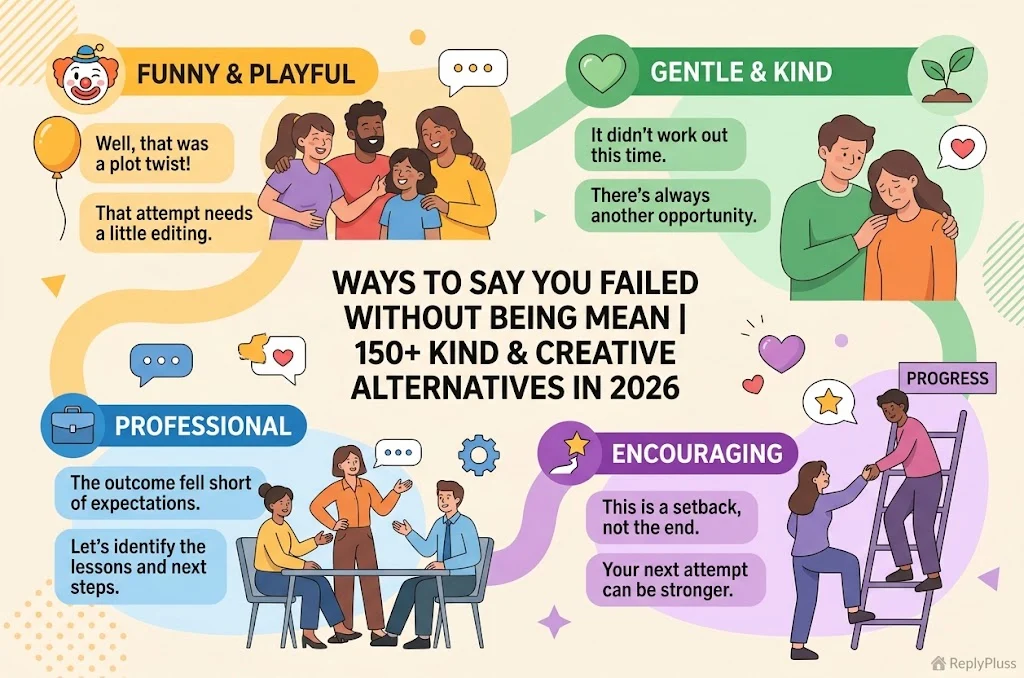
1. Funny Responses
Sometimes, a little humor makes disappointment easier to handle. Use these playful alternatives when the situation is lighthearted and the other person is comfortable joking about it.
- That plan took an unexpected vacation.
Example: When a friend’s carefully planned surprise doesn’t work out.
Meaning: It adds humor while admitting that things went wrong. - Well, that was a plot twist.
Example: When an attempt produces a completely unexpected result.
Meaning: It treats the outcome as surprising rather than embarrassing. - The results did not get the memo.
Example: When everyone’s expectations were much higher than the actual outcome.
Meaning: It jokes about the mismatch between expectations and reality. - We learned what not to do.
Example: After a cooking experiment turns into an inedible dinner.
Meaning: It turns an unsuccessful attempt into a useful lesson. - That attempt needs a little editing.
Example: When a first draft misses the mark.
Meaning: It suggests improvement without dismissing the original effort. - The universe had other plans.
Example: When a long-awaited outing gets canceled at the last minute.
Meaning: It makes an unfortunate result feel less personal. - That didn’t exactly stick the landing.
Example: When a presentation ends awkwardly despite a strong start.
Meaning: It humorously acknowledges that the final result could be better. - Mission almost accomplished.
Example: When someone gets close to completing a difficult challenge.
Meaning: It recognizes progress while admitting that the goal remains unfinished. - Our success story needs another chapter.
Example: When a group project doesn’t produce the expected results.
Meaning: It suggests that the journey isn’t over. - That idea needs a software update.
Example: When an old strategy no longer works.
Meaning: It playfully recommends making improvements. - The first pancake is always a little questionable.
Example: When someone’s first attempt at a new skill goes poorly.
Meaning: It normalizes imperfect beginnings. - Well, at least we made a memorable attempt.
Example: When a friendly competition ends in an unexpected loss.
Meaning: It uses gentle humor to reduce disappointment.
2. Gentle and Kind Responses
These expressions work when someone is feeling embarrassed, discouraged, or disappointed. They acknowledge the outcome without making the person feel small.
- It didn’t work out this time.
Example: When a friend doesn’t get the result they hoped for.
Meaning: It describes the outcome without blaming anyone. - You gave it a genuine try.
Example: When someone feels bad about an unsuccessful attempt.
Meaning: It recognizes the effort they put into the task. - Things didn’t go as planned.
Example: When an event or project turns out differently than expected.
Meaning: It explains the setback in a neutral way. - It’s okay that it didn’t happen.
Example: When a friend misses an opportunity they wanted.
Meaning: It reassures them that one disappointment is manageable. - This doesn’t take away from your effort.
Example: When someone feels their hard work was wasted.
Meaning: It separates the result from the value of their effort. - There’s always another opportunity.
Example: When someone doesn’t pass an important test.
Meaning: It encourages them to keep looking ahead. - You can learn from this experience.
Example: When a person wants to understand what went wrong.
Meaning: It frames the setback as an opportunity to grow. - It wasn’t your moment this time.
Example: When a friend loses a competition.
Meaning: It suggests that the outcome doesn’t define their future. - You don’t have to get everything right.
Example: When someone is being overly critical of themselves.
Meaning: It reminds them that imperfection is normal. - Let’s figure out what we can improve.
Example: When a team wants to understand a disappointing result.
Meaning: It shifts attention from blame to constructive action. - One setback doesn’t define you.
Example: When someone feels that a mistake reflects their whole personality.
Meaning: It protects their confidence while acknowledging the difficulty. - You can always take another shot.
Example: When a friend needs encouragement after an unsuccessful attempt.
Meaning: It offers hope and motivates another effort.
3. Professional Responses
Workplace feedback should be clear, respectful, and focused on results. These phrases help you discuss mistakes without attacking someone’s competence or character.
- The outcome fell short of expectations.
Example: When reviewing a project that missed its objectives.
Meaning: It communicates disappointment in a professional tone. - The objective wasn’t fully achieved.
Example: When summarizing an incomplete business initiative.
Meaning: It identifies the gap between the goal and the result. - There are areas that need improvement.
Example: When providing feedback on an employee’s work.
Meaning: It identifies a need for development without personal criticism. - The results were not as anticipated.
Example: When reporting disappointing campaign performance.
Meaning: It presents the outcome neutrally. - The initial approach was not effective.
Example: When evaluating an unsuccessful workplace strategy.
Meaning: It focuses on the method rather than the person. - We haven’t reached our target yet.
Example: When discussing missed sales or performance goals.
Meaning: It acknowledges the shortfall while leaving room for progress. - The deliverable requires further refinement.
Example: When a submitted report needs significant revision.
Meaning: It communicates that additional work is necessary. - The current strategy needs reassessment.
Example: When a team repeatedly struggles to meet its objectives.
Meaning: It recommends reviewing the plan instead of assigning blame. - The project did not meet its intended objectives.
Example: When documenting an unsuccessful project outcome.
Meaning: It provides a factual and formal assessment. - We need to address the gaps in execution.
Example: When reviewing why a plan was not implemented successfully.
Meaning: It directs attention to specific operational problems. - The performance was below the required standard.
Example: When discussing work that does not meet established criteria.
Meaning: It communicates a clear performance concern. - Let’s identify the lessons and next steps.
Example: When leading a meeting after a disappointing result.
Meaning: It encourages accountability and forward planning.
4. Polite and Diplomatic Responses
Diplomatic wording is useful when you want to be truthful without embarrassing someone. These alternatives are particularly helpful in sensitive conversations.
- It may not have turned out as hoped.
Example: When discussing a friend’s unsuccessful plans.
Meaning: It acknowledges disappointment gently. - Perhaps we could approach it differently next time.
Example: When suggesting changes after an unsuccessful attempt.
Meaning: It proposes improvement without sounding accusatory. - The result could have been better.
Example: When reviewing work that partially meets expectations.
Meaning: It gives honest feedback in measured language. - It seems we missed the mark a little.
Example: When a team produces work that doesn’t match the brief.
Meaning: It identifies a shortfall without exaggerating it. - There might be a better way to handle this.
Example: When a colleague uses an ineffective process.
Meaning: It opens the door to constructive alternatives. - This approach hasn’t delivered the desired result.
Example: When a strategy fails to produce expected improvements.
Meaning: It critiques the approach rather than the person. - We may need to revisit our expectations.
Example: When an ambitious plan proves difficult to achieve.
Meaning: It encourages reconsideration without assigning fault. - The outcome leaves room for improvement.
Example: When giving feedback on a first attempt.
Meaning: It communicates that the work can become stronger. - It wasn’t quite the result we wanted.
Example: When a group project ends below its target.
Meaning: It expresses shared disappointment without blame. - Let’s consider another option.
Example: When a proposed solution doesn’t work.
Meaning: It redirects the conversation toward alternatives. - Some parts didn’t come together as expected.
Example: When reviewing an event with several problems.
Meaning: It acknowledges specific difficulties without condemning the entire effort. - We can build on what we’ve learned.
Example: When discussing how to improve after a setback.
Meaning: It encourages a constructive and respectful response.
5. Sarcastic but Not Mean Responses
A little sarcasm can be funny among friends who understand each other’s humor. Keep these lines light, and avoid using them when someone is genuinely upset.
- Well, that went according to absolutely no plan.
Example: When a casual plan becomes unexpectedly complicated.
Meaning: It highlights the difference between expectations and reality. - Our strategy deserves a second meeting.
Example: When a group realizes its plan wasn’t effective.
Meaning: It playfully suggests the original approach needs work. - The execution had its own interpretation.
Example: When an idea is implemented differently from what was intended.
Meaning: It humorously points out a gap in execution. - That was certainly one way to try it.
Example: When someone takes an unusual approach that doesn’t work.
Meaning: It acknowledges the attempt with mild irony. - The results are keeping us humble.
Example: When an overconfident team performs below expectations.
Meaning: It uses self-aware humor to acknowledge disappointment. - Our plan has entered its experimental phase again.
Example: When a strategy needs another round of changes.
Meaning: It jokes about the need for further testing. - Well, the data has opinions.
Example: When research results contradict everyone’s assumptions.
Meaning: It humorously recognizes that evidence doesn’t match expectations. - That idea didn’t quite survive contact with reality.
Example: When a theoretical plan fails in practice.
Meaning: It points out practical problems without insulting the person. - A bold attempt, an interesting outcome.
Example: When a friend tries something ambitious and misses the goal.
Meaning: It mixes acknowledgment with gentle irony. - The universe declined our proposal.
Example: When several things unexpectedly go wrong during a plan.
Meaning: It makes disappointment sound less personal. - We definitely discovered a few plot holes.
Example: When a complicated plan turns out to have weaknesses.
Meaning: It suggests that the original idea needs revision. - Let’s call that a rehearsal.
Example: When a first attempt at a presentation goes poorly.
Meaning: It reframes the experience as preparation for next time.
6. Encouraging Responses
When someone is disappointed, encouragement can help them regain perspective. These phrases recognize that unsuccessful attempts are part of learning.
- You’re closer than you think.
Example: When a friend nearly achieves a difficult goal.
Meaning: It encourages them to recognize their progress. - Keep going; you’re still learning.
Example: When someone struggles with a new skill.
Meaning: It reminds them that improvement takes practice. - This is a setback, not the end.
Example: When someone experiences a disappointing result.
Meaning: It separates a temporary difficulty from their long-term future. - Your next attempt can be stronger.
Example: When a student doesn’t achieve the grade they wanted.
Meaning: It encourages learning and improvement. - Progress doesn’t always look perfect.
Example: When someone compares their journey with other people’s success.
Meaning: It normalizes uneven progress. - You have more chances to get it right.
Example: When a friend misses an important opportunity.
Meaning: It reminds them that another opportunity may be possible. - Every attempt teaches you something.
Example: When a beginner struggles to master a new task.
Meaning: It highlights the educational value of experience. - Don’t let one result stop you.
Example: When someone considers giving up after a setback.
Meaning: It motivates them to continue working toward their goal. - You’re building experience, even now.
Example: When someone feels that an unsuccessful project was pointless.
Meaning: It recognizes the skills and knowledge gained along the way. - You can come back stronger from this.
Example: When a friend needs motivation after a disappointment.
Meaning: It expresses confidence in their ability to recover. - Give yourself credit for trying.
Example: When someone overlooks the effort they invested.
Meaning: It encourages self-compassion and appreciation of effort. - Let’s focus on what comes next.
Example: When a person is ready to move beyond a disappointing result.
Meaning: It directs attention toward future action.
7. Casual and Chill Responses
For everyday conversations, simple wording often sounds the most natural. These expressions work well in texts, group chats, and relaxed conversations.
- It didn’t work out.
Example: When explaining why a weekend plan was canceled.
Meaning: It communicates the outcome without unnecessary detail. - We missed this one.
Example: When a team loses an informal competition.
Meaning: It acknowledges the loss in a relaxed way. - Not our best attempt.
Example: When a group realizes its first try was unsuccessful.
Meaning: It admits the result could have been better. - We’ll try again later.
Example: When an attempt doesn’t succeed on the first try.
Meaning: It keeps the conversation optimistic and practical. - That didn’t quite happen.
Example: When a planned event falls through.
Meaning: It describes an outcome that never came together. - It wasn’t meant to be this time.
Example: When someone doesn’t get an opportunity they wanted.
Meaning: It offers a relaxed way to accept disappointment. - We gave it a shot.
Example: When friends try a new activity without much success.
Meaning: It recognizes the effort without dwelling on the outcome. - Could’ve gone better.
Example: When someone asks how a presentation went.
Meaning: It admits disappointment without making it dramatic. - Back to the drawing board.
Example: When an idea needs to be completely reconsidered.
Meaning: It suggests starting again with a revised plan. - No luck this time.
Example: When a friend doesn’t win a giveaway.
Meaning: It describes an unsuccessful outcome casually. - That attempt was a miss.
Example: When a joke or idea doesn’t land as expected.
Meaning: It acknowledges a mistake without making it personal. - On to the next thing.
Example: When a group decides not to dwell on a failed plan.
Meaning: It encourages moving forward.
8. Confident Responses
Confidence helps people acknowledge mistakes without losing their sense of self-worth. Use these phrases when you want to show maturity, accountability, and resilience.
- I didn’t get the result I wanted, but I’ll improve.
Example: When reflecting on a disappointing performance.
Meaning: It accepts the outcome while expressing determination. - That attempt didn’t succeed, and I can learn from it.
Example: When discussing a personal setback.
Meaning: It demonstrates accountability without self-criticism. - I know what needs to change now.
Example: When reviewing an unsuccessful strategy.
Meaning: It shows readiness to make practical improvements. - This result doesn’t define my ability.
Example: When someone feels discouraged by one poor performance.
Meaning: It separates a single outcome from overall competence. - I’ll take the lesson and move forward.
Example: When deciding how to respond to a missed opportunity.
Meaning: It demonstrates resilience and a forward-looking attitude. - I can own the mistake without dwelling on it.
Example: When acknowledging an error at work.
Meaning: It balances responsibility with emotional maturity. - The outcome wasn’t ideal, but the next step is clear.
Example: When a project misses its target.
Meaning: It focuses on solutions rather than frustration. - I’ll adjust my approach and try again.
Example: When a first attempt at a difficult task fails.
Meaning: It communicates adaptability and determination. - I’m willing to learn what I missed.
Example: When receiving constructive criticism.
Meaning: It shows openness to feedback and personal development. - I can do better with the right preparation.
Example: When reflecting on an exam or presentation.
Meaning: It expresses confidence in future improvement. - I accept the result and respect the lesson.
Example: When discussing an unsuccessful competition.
Meaning: It demonstrates acceptance and a willingness to learn. - This is feedback, not my final chapter.
Example: When recovering from a disappointing professional outcome.
Meaning: It frames the experience as part of a longer journey.
9. Emotional and Empathetic Responses
Some situations call for sensitivity rather than jokes or quick solutions. These phrases are helpful when someone is struggling with disappointment or self-doubt.
- I know this wasn’t the outcome you hoped for.
Example: When comforting a friend after receiving disappointing news.
Meaning: It acknowledges their feelings without minimizing them. - You don’t have to pretend you’re okay.
Example: When someone is hiding their disappointment.
Meaning: It gives them permission to express their emotions honestly. - It’s understandable to feel disappointed.
Example: When a person worked hard but didn’t reach their goal.
Meaning: It validates their emotional response. - This doesn’t erase everything you’ve accomplished.
Example: When someone focuses only on their latest mistake.
Meaning: It reminds them that previous achievements still matter. - You deserved a chance to see how it would go.
Example: When a friend’s opportunity ends before they can demonstrate their abilities.
Meaning: It recognizes their effort and disappointment. - You can be disappointed and still be proud of yourself.
Example: When someone struggles to accept an imperfect result.
Meaning: It shows that disappointment and self-respect can coexist. - It’s okay to take some time to process this.
Example: When someone needs space after a setback.
Meaning: It respects their emotional needs. - You matter more than this one outcome.
Example: When someone connects their self-worth to a result.
Meaning: It reassures them that their value goes beyond performance. - I’m sorry it didn’t work out the way you wanted.
Example: When supporting a friend after a missed opportunity.
Meaning: It communicates sympathy and understanding. - You don’t have to figure everything out today.
Example: When someone feels overwhelmed by what went wrong.
Meaning: It reduces pressure and allows time for reflection. - I’m here if you want to talk about it.
Example: When a friend is upset about a disappointing experience.
Meaning: It offers support without forcing a conversation. - This moment is difficult, but it isn’t your whole story.
Example: When someone feels hopeless after a setback.
Meaning: It offers perspective while acknowledging their pain.
10. Creative and Thoughtful Responses
Sometimes, a fresh expression communicates more effectively than the word “failed.” These alternatives offer a little originality without losing their meaning.
- The idea needs a new direction.
Example: When a creative project isn’t producing the desired result.
Meaning: It suggests that a different approach may be necessary. - The first draft of success needs revision.
Example: When a first attempt at a personal goal doesn’t work.
Meaning: It treats success as a process that can be improved. - The pieces haven’t fallen into place yet.
Example: When a complex project is still struggling to progress.
Meaning: It suggests that the desired outcome has not come together. - This chapter needs a different ending.
Example: When a plan reaches an unsatisfactory conclusion.
Meaning: It expresses a desire to change the outcome. - The experiment gave us a different answer.
Example: When testing an idea produces unexpected results.
Meaning: It emphasizes discovery instead of disappointment. - The blueprint needs a few adjustments.
Example: When an initial plan proves impractical.
Meaning: It suggests revising the original design. - The road took an unexpected turn.
Example: When a goal becomes harder to achieve than expected.
Meaning: It describes a setback as a change in direction. - The first version has room to grow.
Example: When reviewing an early creative draft.
Meaning: It emphasizes potential rather than shortcomings. - The attempt opened a door to better ideas.
Example: When an unsuccessful project inspires a new approach.
Meaning: It highlights the positive possibilities created by experience. - The result is a rough sketch, not the finished picture.
Example: When a first effort needs substantial refinement.
Meaning: It reminds someone that early work can be improved. - Our expectations and reality took different paths.
Example: When an ambitious plan doesn’t match the final outcome.
Meaning: It describes a mismatch without blaming anyone. - This idea is still finding its feet.
Example: When a new initiative has early difficulties.
Meaning: It suggests that the idea needs time and development.
11. Cute and Friendly Responses
These phrases are especially useful with close friends, supportive classmates, or people who appreciate a warm and playful tone.
- Oops, we’ll get it next time.
Example: When a friend makes a small mistake during a game.
Meaning: It keeps the mood light and hopeful. - Not perfect, but still a good try.
Example: When someone finishes a task that didn’t go as planned.
Meaning: It appreciates the effort without pretending the result was perfect. - A tiny setback, a big lesson.
Example: When a friend is learning something new.
Meaning: It turns a small disappointment into an opportunity for growth. - We’ll make the next attempt even better.
Example: When a shared plan doesn’t succeed.
Meaning: It offers encouragement and teamwork. - That one wasn’t our finest moment.
Example: When friends laugh about a harmless mistake.
Meaning: It acknowledges the outcome with friendly humor. - Every little try counts.
Example: When encouraging a beginner who feels discouraged.
Meaning: It values effort and consistency. - A little stumble doesn’t stop the journey.
Example: When a friend encounters a small setback.
Meaning: It encourages them to keep going. - We still have room to bloom.
Example: When someone is learning a difficult skill.
Meaning: It presents growth as a gradual process. - This try was practice in disguise.
Example: When an attempt produces disappointing results.
Meaning: It reframes the experience as useful preparation. - We’ll turn this into a better story.
Example: When a friend wants to recover from an unsuccessful experience.
Meaning: It expresses optimism about future progress. - No worries, we’re still figuring it out.
Example: When a group makes a minor mistake during a project.
Meaning: It reassures everyone that learning takes time. - A little retry never hurt anyone.
Example: When a friend hesitates to try again.
Meaning: It makes another attempt sound approachable.
12. Direct but Respectful Responses
When clarity matters, you don’t have to hide the truth behind vague language. These phrases address an unsuccessful result while maintaining respect.
- We didn’t achieve the goal.
Example: When discussing a target that wasn’t reached.
Meaning: It states the outcome plainly without personal criticism. - The attempt was unsuccessful.
Example: When describing the result of a trial or application.
Meaning: It gives a clear, neutral assessment. - The plan didn’t work as intended.
Example: When a strategy produces unexpected results.
Meaning: It acknowledges the problem without attacking the people involved. - We need to correct a few mistakes.
Example: When reviewing work that contains errors.
Meaning: It identifies the need for specific improvements. - The result doesn’t meet the requirements yet.
Example: When a submission needs additional work.
Meaning: It clarifies the gap between current performance and the required standard. - We missed the target this time.
Example: When a team falls short of a measurable objective.
Meaning: It communicates the shortfall directly. - The current version isn’t working.
Example: When a design or draft has major issues.
Meaning: It critiques the current work rather than the person who created it. - The approach needs to change.
Example: When repeated attempts produce the same poor result.
Meaning: It makes the need for a new method clear. - We haven’t solved the problem yet.
Example: When a team is still struggling with a technical issue.
Meaning: It acknowledges that the task remains incomplete. - The performance needs improvement.
Example: When giving straightforward feedback on a task.
Meaning: It states a performance concern without using personal labels. - The attempt didn’t meet our expectations.
Example: When evaluating work against agreed objectives.
Meaning: It compares the outcome with the intended standard. - Let’s address what went wrong.
Example: When reviewing an unsuccessful task with a colleague.
Meaning: It encourages honest discussion and practical solutions.
13. Motivational Responses
Motivational phrases are useful when the goal is to help someone regain momentum. They work best when paired with realistic expectations and practical next steps.
- Your next attempt is another opportunity.
Example: When someone is nervous about trying again after a setback.
Meaning: It encourages them to view the future with possibility. - Every expert started somewhere.
Example: When a beginner feels embarrassed about making mistakes.
Meaning: It reminds them that skill develops through experience. - You can improve one step at a time.
Example: When a large goal feels overwhelming.
Meaning: It makes improvement feel achievable through smaller actions. - Mistakes can teach what success sometimes cannot.
Example: When reflecting on a difficult learning experience.
Meaning: It highlights the insights that can come from setbacks. - Keep the goal, change the strategy.
Example: When the original method isn’t producing results.
Meaning: It encourages persistence alongside flexibility. - Your effort can become experience.
Example: When someone thinks their unsuccessful attempt was wasted.
Meaning: It emphasizes the value of what they’ve learned. - You haven’t used every option yet.
Example: When someone is considering giving up too soon.
Meaning: It encourages them to explore other approaches. - A better result starts with a better plan.
Example: When preparing to repeat a difficult task.
Meaning: It directs attention toward practical preparation. - You can recover from a disappointing result.
Example: When someone needs reassurance after a poor performance.
Meaning: It reinforces their ability to move forward. - Small improvements can create real progress.
Example: When a person feels that their progress is too slow.
Meaning: It reminds them that incremental changes matter. - Don’t confuse a difficult attempt with a dead end.
Example: When a challenge feels impossible after several setbacks.
Meaning: It encourages a broader view of the available options. - Your story still has room for success.
Example: When someone feels defined by one unsuccessful experience.
Meaning: It encourages hope without promising a particular outcome.
14. Academic and Student-Friendly Responses
Students often need a considerate way to discuss poor grades, unsuccessful exams, rejected assignments, or disappointing academic results.
- The grade wasn’t what I expected.
Example: When discussing an exam result with a classmate.
Meaning: It acknowledges disappointment without labeling the student. - I need to strengthen my understanding of the topic.
Example: When a student struggles with a difficult subject.
Meaning: It identifies learning as the next step. - My preparation could have been better.
Example: When reflecting on an exam that didn’t go well.
Meaning: It accepts responsibility without harsh self-judgment. - I didn’t perform at my usual level.
Example: When explaining a disappointing academic result.
Meaning: It distinguishes one performance from overall ability. - I need a different study strategy.
Example: When a student studies hard but doesn’t improve their results.
Meaning: It suggests changing the method rather than abandoning the goal. - The assignment needs more work.
Example: When a draft receives feedback requiring revisions.
Meaning: It describes the task’s current state clearly. - I haven’t mastered this material yet.
Example: When a student finds a concept difficult to understand.
Meaning: It presents learning as an ongoing process. - I need to work on my exam technique.
Example: When a student understands the subject but struggles with timed tests.
Meaning: It identifies a specific skill to improve. - This result shows me where I need help.
Example: When a student receives a lower grade than expected.
Meaning: It encourages seeking support and addressing weaknesses. - I can prepare more effectively next time.
Example: When planning for a retake or future examination.
Meaning: It focuses on preparation and future improvement. - I haven’t reached the required standard yet.
Example: When an assignment doesn’t satisfy the marking criteria.
Meaning: It acknowledges the gap while leaving room for progress. - I’ll use this feedback to improve my work.
Example: When responding to comments on an essay or project.
Meaning: It demonstrates a constructive attitude toward feedback.
15. Short and Text-Friendly Responses
Need something quick for a message, DM, or group chat? These concise alternatives communicate the point without making the conversation awkward.
- Not this time.
Example: When a friend doesn’t get selected for a team.
Meaning: It acknowledges the result briefly and gently. - Didn’t go as planned.
Example: When explaining why a personal plan didn’t work.
Meaning: It offers a simple, neutral description. - Room to improve.
Example: When reviewing an early attempt at a task.
Meaning: It signals that progress is still possible. - Back to square one.
Example: When an approach needs to be reconsidered from the beginning.
Meaning: It communicates the need to restart or rethink the plan. - A learning moment.
Example: When a minor mistake provides useful feedback.
Meaning: It emphasizes what can be learned from the experience. - Not quite there yet.
Example: When a person is close to meeting a goal.
Meaning: It acknowledges progress while recognizing unfinished work. - Needs another try.
Example: When an initial attempt doesn’t succeed.
Meaning: It suggests that another effort may help. - We fell short.
Example: When a group doesn’t meet its goal.
Meaning: It states the shortfall in a concise way. - Could use a rethink.
Example: When an idea doesn’t produce the intended result.
Meaning: It recommends reconsidering the current approach. - A miss, not the end.
Example: When encouraging someone after a disappointing outcome.
Meaning: It reminds them that one setback doesn’t have to be final. - Still a work in progress.
Example: When a project or skill needs more development.
Meaning: It emphasizes that improvement is ongoing. - We’ll get there eventually.
Example: When a friend needs encouragement after a difficult attempt.
Meaning: It expresses patience and optimism about future progress.
FAQs
What Does It Mean to Say You Failed Without Being Mean?
It means describing an unsuccessful outcome honestly without insulting, blaming, or embarrassing someone.
How Can I Say Someone Failed Politely?
Try “The result wasn’t what we hoped for” or “There’s room for improvement.”
How Can I Say You Failed in a Professional Way?
Use “The objective wasn’t achieved” or “The outcome fell short of expectations.”
Can Saying You Failed Without Being Mean Sound Flirty?
Yes, playful phrases like “Not your winning moment, but still impressive” can sound warm and teasing.
What Should I Say If I Don’t Actually Mean Someone Failed?
Focus on the specific outcome, such as “That approach didn’t work,” rather than labeling the person.
Is Humor Appropriate When Someone Fails?
Yes, if the person enjoys humor and the situation is lighthearted. Avoid jokes when they’re genuinely upset.
How Can I Comfort Someone Who Failed?
Acknowledge their disappointment, recognize their effort, and offer support without rushing them to feel better.
What Is a Good Alternative to the Word Failed?
Try “didn’t work out,” “fell short,” “was unsuccessful,” or “needs improvement.”
How Do I Tell a Friend They Didn’t Do Well?
Be honest and kind. Explain what could improve while recognizing what they did well.
How Can I Describe My Own Failure Positively?
Say “I learned something valuable from this experience” or “I’ll approach it differently next time.”
Conclusion
Knowing how to say you failed without being mean is a small communication skill that can make a big difference. The right words help you deliver honest feedback, protect someone’s confidence, and keep conversations respectful. Whether you prefer a funny one-liner, a professional expression, or a warm message to a friend, choose words that match the situation and the other person’s feelings.
Remember, being kind doesn’t mean pretending everything went perfectly. It means acknowledging what happened without making someone feel defined by it. Try a few of these expressions in your next conversation, save your favorites for later, and share this list with someone who appreciates thoughtful communication. A little empathy can go a long way