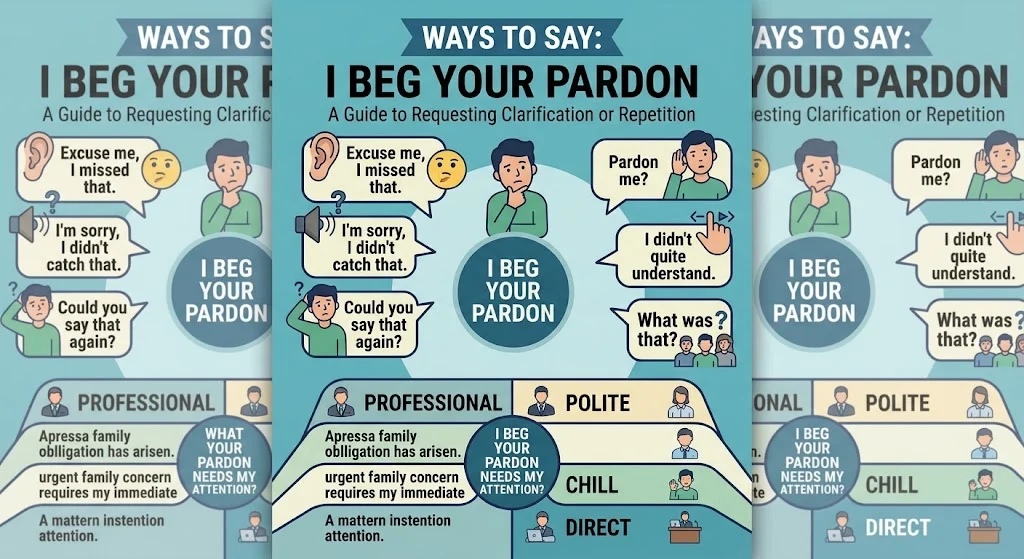
Looking for different ways to say “I beg your pardon” without sounding overly formal or repeating the same phrase? Whether you need to ask someone to repeat themselves, express surprise, or respond politely, these alternatives fit everything from casual chats to professional situations.
Ever heard someone say something so unexpected that your brain needs a second to catch up? Or been in a meeting where you missed the last three words because your mind was busy planning lunch? That’s when knowing different ways to say “I beg your pardon” comes in handy.
This classic expression can mean several things depending on the situation. You might use it to ask someone to repeat themselves, apologize for interrupting, express surprise, or politely challenge a comment that crossed the line. It works in formal conversations, but it can sound a little dramatic in a text to your best friend.
1. Polite Ways to Say I Beg Your Pardon
Use these courteous alternatives when you want to sound respectful without making a simple request feel awkward.
1. Excuse me, could you repeat that?
Example: Asking a colleague to repeat an instruction you missed.
Meaning: You politely request that someone say something again.
2. Pardon me?
Example: Asking a stranger to repeat a question in a public place.
Meaning: You want clarification while keeping your tone respectful.
3. I’m sorry, I didn’t catch that.
Example: Responding when background noise makes someone’s words difficult to hear.
Meaning: You acknowledge that you missed what the person said.
4. Would you mind repeating that?
Example: Asking a teacher to repeat an important point during class.
Meaning: You request repetition in a considerate way.
5. Could you say that again, please?
Example: Clarifying directions from someone you have just met.
Meaning: You politely ask for the information a second time.
6. Sorry, could you clarify that for me?
Example: Asking for a clearer explanation of an unfamiliar term.
Meaning: You want to understand the message more accurately.
7. I beg your pardon, I missed the last part.
Example: Asking someone to repeat the final detail of an announcement.
Meaning: You explain exactly what you did not hear.
8. Would you please repeat yourself?
Example: Requesting repetition during a formal discussion.
Meaning: You make a direct but courteous request.
9. Could you speak a little more clearly, please?
Example: Asking someone to speak more clearly during a phone call.
Meaning: You need clearer speech to understand the message.
10. Sorry, would you mind saying that once more?
Example: Checking a detail before writing it in your notes.
Meaning: You request another repetition without sounding demanding.
2. Funny Ways to Say I Beg Your Pardon
Sometimes a little humor makes it easier to admit that you didn’t hear someone. These lines are best for relaxed conversations with people who appreciate a joke.
1. Sorry, my ears just clocked out.
Example: Reacting when you miss a friend’s punchline.
Meaning: You jokingly admit that you weren’t listening properly.
2. Come again? My brain buffered.
Example: Asking a friend to repeat an unexpected comment.
Meaning: You humorously compare your confusion to a slow internet connection.
3. Say that again, but slowly for my last brain cell.
Example: Responding to a complicated explanation from a friend.
Meaning: You playfully suggest that the information was hard to process.
4. Wait, did my ears just unsubscribe?
Example: Reacting to a surprising statement in a group chat.
Meaning: You express confusion through a social-media-style joke.
5. Sorry, I was mentally on another planet.
Example: Admitting you missed a question because you were daydreaming.
Meaning: You make light of being distracted.
6. Repeat that before my confusion becomes permanent.
Example: Asking someone to explain an unexpected plan.
Meaning: You jokingly emphasize how confused you feel.
7. Hold up, my subtitles were turned off.
Example: Requesting repetition after missing a few words.
Meaning: You humorously suggest that you need captions to follow along.
8. My brain said, ‘Please try again later.’
Example: Reacting to a difficult question during a casual chat.
Meaning: You admit that your mind needs another moment to understand.
9. Excuse me, the audio quality was questionable.
Example: Asking a friend to repeat a mumbled comment.
Meaning: You make a lighthearted complaint about unclear speech.
10. Can you run that sentence back?
Example: Asking someone to repeat a funny story.
Meaning: You want to hear the statement again.
3. Professional Ways to Say I Beg Your Pardon
In the workplace, the right wording can help you ask for clarification without appearing inattentive or confrontational.
1. Could you please repeat the last point?
Example: Clarifying the final instruction during a team meeting.
Meaning: You politely request repetition of a specific detail.
2. I’d appreciate it if you could clarify that point.
Example: Seeking clarification about a project requirement.
Meaning: You express a professional need for greater clarity.
3. I’m sorry, I didn’t quite catch your last statement.
Example: Responding when a speaker talks quickly during a presentation.
Meaning: You acknowledge that you missed part of the message.
4. Could you elaborate on what you mean?
Example: Asking a manager to explain an unfamiliar proposal.
Meaning: You invite the speaker to provide more detail.
5. Would you mind rephrasing that?
Example: Clarifying a technical explanation during a discussion.
Meaning: You request different wording to improve understanding.
6. Could you please clarify your intended meaning?
Example: Checking the meaning of an ambiguous instruction.
Meaning: You seek a precise interpretation of the speaker’s words.
7. I may have misunderstood. Could you explain that again?
Example: Double-checking an assignment before beginning work.
Meaning: You take a careful approach to resolving possible confusion.
8. May I ask you to repeat that for accuracy?
Example: Confirming an important figure during a business call.
Meaning: You prioritize getting the information right.
9. Could you provide some additional context?
Example: Requesting background information about a new task.
Meaning: You need more information to understand the point fully.
10. I’d like to make sure I’ve understood you correctly.
Example: Confirming a deadline discussed during a meeting.
Meaning: You want to prevent mistakes caused by misunderstanding.
4. Sarcastic Ways to Say I Beg Your Pardon
These responses add a little attitude when someone says something unexpected or questionable. Use them with people who understand your sense of humor.
1. I’m sorry, what exactly was that?
Example: Reacting to a friend’s unusually bold remark.
Meaning: You express disbelief and invite the person to repeat the statement.
2. Care to repeat that interesting choice of words?
Example: Responding to a questionable comment in a friendly debate.
Meaning: You draw attention to the speaker’s wording.
3. Did I hear that correctly, or is this a plot twist?
Example: Reacting to unexpected news from someone you know well.
Meaning: You show surprise with a playful hint of skepticism.
4. Could you repeat that for the record?
Example: Asking someone to restate a surprising claim.
Meaning: You suggest that the statement deserves closer attention.
5. I’m sorry, was that meant to make sense?
Example: Reacting to a confusing explanation from a close friend.
Meaning: You question the clarity of the statement with sarcasm.
6. Let’s try that sentence one more time.
Example: Responding when someone makes an awkward remark.
Meaning: You encourage the person to reconsider their wording.
7. Excuse me, did we all hear that?
Example: Reacting to an unexpected comment in a group setting.
Meaning: You highlight the statement as something surprising.
8. I need a moment to process that masterpiece.
Example: Responding to a friend’s questionable logic.
Meaning: You use irony to express disbelief.
9. Sorry, my standards for conversation are buffering.
Example: Teasing a friend after an unusually confusing explanation.
Meaning: You jokingly imply that the conversation needs improvement.
10. Could you explain that bold statement?
Example: Challenging a surprising opinion during a casual debate.
Meaning: You ask the person to justify what they said.
5. Formal and Elegant Ways to Say I Beg Your Pardon
When etiquette matters, these expressions help you sound composed, refined, and respectful.
1. I beg your pardon; could you repeat that?
Example: Asking a speaker to repeat a statement at a formal event.
Meaning: You use a traditional expression to request clarification politely.
2. My apologies, I did not hear you clearly.
Example: Responding to a guest during a formal reception.
Meaning: You acknowledge the communication problem courteously.
3. Would you be so kind as to repeat that?
Example: Asking someone to repeat an important instruction in a formal setting.
Meaning: You make a highly courteous request.
4. I must ask you to clarify your meaning.
Example: Seeking a precise explanation during a formal discussion.
Meaning: You respectfully request a clearer interpretation.
5. Might I trouble you to repeat that?
Example: Asking a senior colleague to repeat a detail.
Meaning: You frame the request with traditional politeness.
6. I did not quite follow your last remark.
Example: Responding when a discussion moves too quickly.
Meaning: You explain that you need help following the conversation.
7. Would you care to explain that further?
Example: Inviting additional explanation during a formal exchange.
Meaning: You request more detail in a measured tone.
8. I would be grateful for a little clarification.
Example: Asking for clarification about an official instruction.
Meaning: You express appreciation for the speaker’s help.
9. May I ask what you intended by that statement?
Example: Clarifying a remark that could have several interpretations.
Meaning: You politely ask the speaker to explain their intention.
10. I fear I may have missed your point.
Example: Responding after losing track of a lengthy explanation.
Meaning: You acknowledge a possible gap in your understanding.
6. Casual Ways to Say I Beg Your Pardon
For everyday conversations, you don’t need a formal sentence. These natural alternatives work well with friends, classmates, and familiar colleagues.
1. Sorry, what?
Example: Asking a friend to repeat something you missed.
Meaning: You casually request clarification.
2. Wait, what did you say?
Example: Checking a detail while chatting with a friend.
Meaning: You want to hear the statement again.
3. Come again?
Example: Reacting when someone speaks too quickly.
Meaning: You ask for repetition in a relaxed way.
4. What was that?
Example: Asking someone to repeat a sentence in a noisy room.
Meaning: You want to know what the person said.
5. Say that again?
Example: Asking a classmate to repeat a quick explanation.
Meaning: You request another repetition without much formality.
6. I missed that.
Example: Letting a friend know you didn’t hear their last sentence.
Meaning: You briefly acknowledge that you lost part of the conversation.
7. Run that by me again.
Example: Asking a friend to explain their weekend plans again.
Meaning: You want to hear the information another time.
8. Wait, I wasn’t listening.
Example: Admitting to a friend that you got distracted.
Meaning: You honestly acknowledge that you missed the message.
9. What was the last part?
Example: Asking someone to repeat the final detail of a story.
Meaning: You only need clarification about a specific part.
10. Sorry, I zoned out.
Example: Explaining why you missed a friend’s comment.
Meaning: You admit that your attention briefly wandered.
11. Can you say that again?
Example: Asking a sibling to repeat an instruction.
Meaning: You request repetition in everyday language.
12. I didn’t get that.
Example: Asking someone to explain a confusing comment.
Meaning: You indicate that the message was unclear to you.
7. Clever Ways to Say I Beg Your Pardon
These expressions help you sound thoughtful and articulate while making it clear that you need more information.
1. Could you give that another wording?
Example: Asking someone to explain an idea differently.
Meaning: You want the same information expressed more clearly.
2. I think I missed a chapter there.
Example: Reacting when a friend skips an important part of a story.
Meaning: You humorously point out that you lack some context.
3. Could you fill in the missing details?
Example: Asking a colleague to explain an incomplete plan.
Meaning: You request information needed to understand the whole picture.
4. Let’s rewind that thought for a second.
Example: Asking someone to repeat an important part of an explanation.
Meaning: You want to revisit the idea before moving forward.
5. I need a clearer version of that sentence.
Example: Responding to a complicated explanation.
Meaning: You request a more understandable version of the message.
6. Could you unpack that a little?
Example: Asking a classmate to explain a difficult concept.
Meaning: You want the person to break down the idea.
7. I may be missing a piece of the puzzle.
Example: Seeking more information about an unexpected decision.
Meaning: You acknowledge that you may not have all the facts.
8. Let’s make sure we’re on the same page.
Example: Confirming shared understanding before starting a project.
Meaning: You want both people to interpret the information similarly.
9. Could you connect the dots for me?
Example: Asking someone to explain how two ideas relate.
Meaning: You want to understand the connection between details.
10. That needs a little more context.
Example: Responding to a vague statement in a group discussion.
Meaning: You explain that more background information is necessary.
8. Confident Ways to Say I Beg Your Pardon
Use these when you want to ask a question directly without sounding apologetic or uncertain.
1. Please repeat your last statement.
Example: Asking someone to repeat a key point during a discussion.
Meaning: You make a clear and direct request.
2. I’d like to understand that better.
Example: Seeking more information before agreeing to a proposal.
Meaning: You show that you want clarity before responding.
3. What exactly do you mean by that?
Example: Asking someone to explain an ambiguous remark.
Meaning: You request a precise explanation.
4. Could you be more specific?
Example: Asking for exact details about an assignment.
Meaning: You want the person to replace vague wording with clear information.
5. I need clarification on that point.
Example: Checking a requirement before making a decision.
Meaning: You state directly that further explanation is necessary.
6. Let me make sure I understood you correctly.
Example: Confirming instructions before carrying out a task.
Meaning: You take responsibility for checking your understanding.
7. Please explain what you meant.
Example: Asking someone to clarify a statement that seemed ambiguous.
Meaning: You clearly request an explanation of their intention.
8. Could you state that more clearly?
Example: Asking a speaker to explain an unclear point.
Meaning: You ask for more precise communication.
9. I want to be certain about what you said.
Example: Double-checking an important detail before acting.
Meaning: You prioritize accuracy over assumptions.
10. Let’s clarify that before moving on.
Example: Resolving confusion during a team discussion.
Meaning: You want to settle the misunderstanding before continuing.
9. Cute Ways to Say I Beg Your Pardon
These sweet and playful alternatives are perfect for close friends, family members, and lighthearted chats.
1. Oops, say that again for me?
Example: Asking a friend to repeat a sweet compliment.
Meaning: You make a simple request sound friendly and warm.
2. My little brain missed that part.
Example: Reacting when you lose track of a friend’s story.
Meaning: You playfully admit that you need repetition.
3. Wait, I need a replay.
Example: Asking someone to repeat a funny or surprising moment.
Meaning: You want another chance to hear what happened.
4. Can you tell me that one more time?
Example: Asking a loved one to repeat something meaningful.
Meaning: You want to hear the words again.
5. Sorry, I got distracted for a tiny second.
Example: Explaining why you missed a friend’s comment.
Meaning: You gently admit that your attention wandered.
6. Say it again, please and thank you.
Example: Asking a sibling to repeat an amusing story.
Meaning: You combine a request with a cheerful tone.
7. Wait, my attention went on a little vacation.
Example: Responding after briefly daydreaming during a conversation.
Meaning: You humorously acknowledge your distraction.
8. Can I get a tiny repeat?
Example: Asking a friend to repeat a quick instruction.
Meaning: You make your request sound soft and casual.
9. I missed that little detail.
Example: Asking for one more piece of information about a plan.
Meaning: You politely acknowledge a small gap in your understanding.
10. One more time for my curious little brain?
Example: Requesting another explanation from someone patient with you.
Meaning: You express curiosity in an affectionate way.
10. Sarcastic but Respectful Ways to Say I Beg Your Pardon
Sometimes a comment catches you off guard, but you still want to keep your response controlled. These lines add a little edge without automatically turning the moment into an argument.
1. Could you repeat that more thoughtfully?
Example: Responding to a careless remark during a discussion.
Meaning: You invite the person to reconsider how they expressed themselves.
2. I’m interested in hearing you explain that.
Example: Asking someone to support a questionable claim.
Meaning: You request further explanation while signaling skepticism.
3. Would you like to reconsider those words?
Example: Responding to a remark that sounds unnecessarily rude.
Meaning: You give the speaker an opportunity to rethink their statement.
4. I hope I misunderstood that correctly.
Example: Reacting to a comment that could have an offensive meaning.
Meaning: You leave room for clarification without immediately accusing the speaker.
5. Can we revisit what you just said?
Example: Addressing a surprising statement during a serious conversation.
Meaning: You want to examine the comment before moving forward.
6. That came across differently than you may have intended.
Example: Responding when someone’s wording sounds dismissive.
Meaning: You point out a possible communication problem.
7. Could you explain the reasoning behind that?
Example: Questioning an unsupported opinion in a debate.
Meaning: You ask the person to justify their statement.
8. I would appreciate a clearer explanation.
Example: Requesting clarification after an uncomfortable remark.
Meaning: You maintain a respectful tone while asking for accountability.
9. I’m not sure I understood that the way you intended.
Example: Responding to a comment that could be interpreted in different ways.
Meaning: You invite the person to clarify their meaning.
10. Let’s be precise about what you just said.
Example: Clarifying a disputed point during a serious discussion.
Meaning: You emphasize the need for accurate wording.
11. Ways to Say I Beg Your Pardon When You’re Surprised
When someone shares unexpected news or makes an unbelievable statement, these expressions communicate surprise and invite them to explain.
1. Wait, seriously?
Example: Reacting to unexpected news from a friend.
Meaning: You express surprise and ask whether the information is true.
2. Did I hear that right?
Example: Checking a surprising announcement.
Meaning: You want confirmation that you understood the statement correctly.
3. Hold on, what just happened?
Example: Reacting to an unexpected change in plans.
Meaning: You express confusion about a sudden development.
4. Excuse me, what did you just say?
Example: Responding to a shocking comment.
Meaning: You ask the speaker to repeat something that surprised you.
5. Wait a minute, explain that.
Example: Asking a friend for details about unexpected news.
Meaning: You need more information before reacting.
6. I wasn’t expecting that.
Example: Responding to an unexpected confession.
Meaning: You communicate genuine surprise.
7. That caught me off guard.
Example: Reacting to an unusual announcement during a conversation.
Meaning: You explain that the statement was unexpected.
8. Can we go back to that last part?
Example: Asking someone to repeat the most surprising detail of a story.
Meaning: You want to revisit the information that caught your attention.
9. Wait, I need the full story.
Example: Asking for more details after hearing unexpected news.
Meaning: You want a fuller explanation before drawing conclusions.
10. Did that really just happen?
Example: Reacting to an unbelievable moment among friends.
Meaning: You express astonishment and seek confirmation.
12. Ways to Say I Beg Your Pardon When Someone Is Rude
If someone makes an inappropriate comment, you can ask for clarification while making it clear that you expect respectful communication.
1. Excuse me, what did you mean by that?
Example: Responding to a remark that feels insulting.
Meaning: You ask the person to explain their potentially disrespectful wording.
2. Could you explain that comment?
Example: Addressing an unclear remark made at your expense.
Meaning: You invite the person to clarify what they intended.
3. I’d appreciate it if you clarified that statement.
Example: Responding to an uncomfortable comment in a professional setting.
Meaning: You request clarity without matching the other person’s tone.
4. I’m not sure that was appropriate.
Example: Reacting to an insensitive joke.
Meaning: You communicate discomfort with the remark.
5. Would you mind explaining why you said that?
Example: Asking someone about an unexpectedly personal comment.
Meaning: You seek the reason behind their words.
6. I hope you meant that differently.
Example: Responding to a statement that sounds disrespectful.
Meaning: You leave space for the person to correct a possible misunderstanding.
7. Let’s keep this conversation respectful.
Example: Addressing rude language during a disagreement.
Meaning: You set a clear boundary for the discussion.
8. Could you rephrase that in a respectful way?
Example: Asking someone to change their tone during a tense conversation.
Meaning: You expect the message to be communicated more appropriately.
9. That comment needs some clarification.
Example: Responding to an ambiguous personal remark.
Meaning: You indicate that the statement should be explained.
10. I’m giving you a chance to explain that.
Example: Addressing a remark that seems intentionally hurtful.
Meaning: You invite an explanation before deciding how to respond.
13. Ways to Say I Beg Your Pardon in Text Messages
Texting makes short responses especially useful. These options work in DMs, group chats, and everyday messages.
1. Wait, what?
Example: Replying to an unexpected text from a friend.
Meaning: You express quick confusion or surprise.
2. Sorry, can you repeat that?
Example: Asking someone to resend a detail you missed.
Meaning: You request repetition in a clear, friendly way.
3. I didn’t catch that lol.
Example: Responding after missing part of a casual group chat.
Meaning: You acknowledge confusion while keeping the mood light.
4. What do you mean by that?
Example: Asking someone to explain an ambiguous message.
Meaning: You want the sender to clarify their intention.
5. Wait, run that back.
Example: Reacting to an unexpected update in your DMs.
Meaning: You want to read or hear the information again.
6. Sorry, my bad. What was that?
Example: Admitting you missed a message while multitasking.
Meaning: You acknowledge your distraction and ask for repetition.
7. Can you explain that again?
Example: Asking a classmate to clarify a confusing assignment message.
Meaning: You request another explanation.
8. Hold up, I need context.
Example: Responding to a vague message in a group chat.
Meaning: You need background information to understand the message.
9. Wait, did you mean that literally?
Example: Clarifying a message that could be a joke or a serious statement.
Meaning: You want to understand whether the sender is being serious.
10. I’m confused, help me out.
Example: Asking a friend to explain an unclear text.
Meaning: You openly request help understanding the message.
14. Ways to Say I Beg Your Pardon When Flirting
When you’re talking to a crush, your response can show curiosity, playful surprise, or interest. Keep it natural so the flirtation feels comfortable rather than forced.
1. Wait, did you just say that to me?
Example: Reacting when your crush gives you an unexpected compliment.
Meaning: You show playful surprise and invite them to confirm their words.
2. Sorry, I need to hear that again.
Example: Responding to a sweet message from someone you like.
Meaning: You hint that their words caught your attention.
3. Care to repeat that, cutie?
Example: Teasing someone you’re already flirting with.
Meaning: You make a request for repetition feel affectionate.
4. Wait, was that supposed to make me blush?
Example: Reacting to a charming comment from your crush.
Meaning: You acknowledge the flirtation with playful warmth.
5. I might have heard what I wanted to hear.
Example: Responding to a hint that someone may like you.
Meaning: You playfully suggest that their words could have a romantic meaning.
6. Say that again, and I might believe you.
Example: Replying to a flattering message from someone you trust.
Meaning: You invite them to repeat the compliment with a teasing tone.
7. Excuse me, are you trying to charm me?
Example: Responding to a sweet or flirtatious remark.
Meaning: You notice the attention and playfully acknowledge it.
8. Hold on, that sounded suspiciously cute.
Example: Reacting to an unexpectedly affectionate text.
Meaning: You express interest while keeping the mood light.
9. Can you repeat that? I was busy smiling.
Example: Replying to a message that makes you happy.
Meaning: You show that the person’s words had a positive effect on you.
10. Wait, should I be blushing right now?
Example: Responding to a romantic hint from someone you like.
Meaning: You express bashful surprise and encourage playful conversation.
11. I’m listening, especially when you say things like that.
Example: Replying to a compliment from a crush.
Meaning: You signal that you enjoy their attention.
15. Short and Simple Alternatives to I Beg Your Pardon
When you need a quick response, simple wording is often the most effective. These options work in person, over the phone, and in messages.
1. Pardon?
Example: Asking someone to repeat a word you missed.
Meaning: You briefly request repetition.
2. Excuse me?
Example: Responding when you didn’t hear someone clearly.
Meaning: You politely ask for clarification.
3. Sorry?
Example: Asking someone to repeat a short statement.
Meaning: You signal that you missed something.
4. Again, please?
Example: Asking a colleague to repeat a number.
Meaning: You request another repetition in just two words.
5. What was that?
Example: Asking a friend to repeat a sentence.
Meaning: You want to hear the statement again.
6. Could you repeat that?
Example: Checking a detail during a conversation.
Meaning: You make a direct request for repetition.
7. I missed that.
Example: Explaining why you need the last sentence repeated.
Meaning: You acknowledge that you didn’t hear the information.
8. Please clarify.
Example: Asking for a clearer explanation in a written discussion.
Meaning: You request more precise information.
9. What do you mean?
Example: Responding to an unclear statement.
Meaning: You ask the speaker to explain their meaning.
10. Say that again?
Example: Asking a friend to repeat something surprising.
Meaning: You request repetition in an informal tone.
11. One more time?
Example: Asking someone to repeat a quick instruction.
Meaning: You request another attempt at explaining or saying something.
12. Could you rephrase that?
Example: Asking someone to use different words to explain an idea.
Meaning: You want the same message expressed more clearly.
FAQs
What does “I beg your pardon” mean?
It can mean “please repeat that,” “excuse me,” or “I find that surprising or offensive.”
Is “I beg your pardon” rude?
Not usually. Its meaning depends on your tone and whether you’re asking politely or expressing offense.
What is a casual way to say “I beg your pardon”?
Try “Sorry, what?” or “Could you say that again?”
What is a professional alternative to “I beg your pardon”?
Use “Could you please clarify that point?” in meetings or workplace conversations.
Can “I beg your pardon” express anger?
Yes. With a sharp tone, it can show that you found someone’s remark disrespectful.
How do I respond when someone says “I beg your pardon”?
Repeat what you said, clarify your meaning, or apologize if your words caused offense.
Is “pardon me” the same as “excuse me”?
They often have similar meanings, especially when politely interrupting or asking for attention.
Can I use funny alternatives with my crush?
Yes, if you already share a playful vibe and the joke feels comfortable for both of you.
What if I don’t actually mean to apologize?
Use “Could you repeat that?” if you simply didn’t hear the person.
Is humor appropriate when asking someone to repeat themselves?
Yes, with friends or relaxed coworkers. Use a polite, direct phrase in serious situations.
Conclusion
Knowing different ways to say I beg your pardon helps you handle everyday conversations with more confidence. Whether you’re asking a coworker to clarify an instruction, reacting to an unexpected comment, joking with friends, or flirting with someone special, the right phrase can make your response feel more natural.
You don’t always need formal language, and you don’t have to apologize when you simply need someone to repeat themselves. Choose words that fit the situation, respect the other person, and reflect your personality. Save this list for your next conversation, share your favorite alternatives with a friend, and try a new expression whenever the moment calls for it!