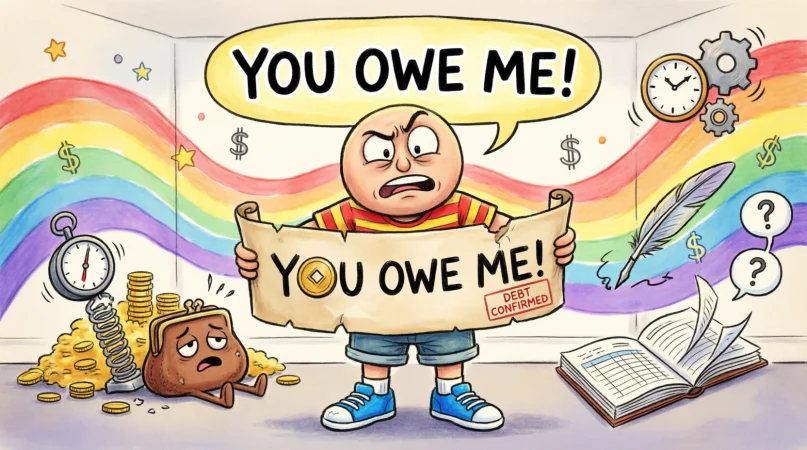
The best responses to “you owe me” depend on who’s saying it and what they expect from you. You can reply with humor, flirt a little, acknowledge a genuine favor, or confidently set a boundary when someone is being unfair.
One little text can turn a normal conversation into a full-blown negotiation: “You owe me.” Suddenly, you’re wondering whether your friend wants their coffee money back, your crush is hinting at a date, or someone is keeping a suspiciously detailed record of every favor they’ve ever done for you.
The best answer depends on your relationship, the situation, and whether the other person is joking or genuinely asking for something. Here, you’ll find witty one-liners, sweet replies, professional responses, and firm boundaries you can use in texts, DMs, and real-life conversations.
1. Funny Responses to You Owe Me
1. Put it on my tab.
Example: A friend jokes that you owe them for buying your lunch.
Meaning: This keeps the exchange playful without taking the alleged debt too seriously.
2. Do you accept payment in snacks?
Example: Someone reminds you that you promised to return a small favor.
Meaning: This suggests a funny alternative to traditional repayment.
3. My accountant will contact you shortly.
Example: A friend dramatically asks you to pay them back for something minor.
Meaning: This uses mock professionalism to make the situation amusing.
4. I’ll pay you in unlimited memes.
Example: Your best friend reminds you about a favor during a casual chat.
Meaning: This offers a humorous form of imaginary compensation.
5. Please submit your claim in writing.
Example: Someone keeps bringing up the same favor whenever you meet.
Meaning: This makes their reminder sound like an exaggerated official process.
6. My wallet is currently unavailable.
Example: A friend jokingly asks you to repay a small amount of money.
Meaning: This humorously suggests that your finances are temporarily out of reach.
7. Can I pay in good vibes and gratitude?
Example: Someone helps you and playfully asks what they get in return.
Meaning: This keeps the exchange light and friendly.
8. I’ll add it to my friendship debt collection.
Example: A close friend teases you about several favors you have exchanged.
Meaning: This turns your mutual history into a playful running joke.
9. Please allow three to five business years.
Example: A friend jokes about collecting on a harmless, non-urgent favor.
Meaning: This exaggerates the repayment delay for comic effect.
10. I didn’t know we were keeping receipts!
Example: Someone remembers a tiny favor from months ago.
Meaning: This jokes about their detailed record of what you supposedly owe.
2. Sarcastic Responses to You Owe Me
1. And here comes the invoice.
Example: Someone reminds you of a favor as though it were a formal transaction.
Meaning: This lightly mocks the seriousness of the reminder.
2. Should I expect interest too?
Example: A friend jokes about a small amount you need to repay.
Meaning: This sarcastically suggests that the debt is being treated like a loan.
3. Wow, friendship has a subscription fee now?
Example: Someone repeatedly reminds you of favors they have done.
Meaning: This teases them for treating friendship like a paid service.
4. I’ll alert the financial department immediately.
Example: A friend dramatically demands repayment for something minor.
Meaning: This uses exaggerated workplace language to create humor.
5. Your generosity has been officially recorded.
Example: Someone keeps mentioning how much they have helped you.
Meaning: This sarcastically comments on their desire for recognition.
6. Is there a loyalty program for this debt?
Example: A friend claims you owe them after several small favors.
Meaning: This turns their repeated reminders into a joke about reward points.
7. How thoughtful of you to keep such detailed records.
Example: Someone remembers every favor they have ever done for you.
Meaning: This highlights their impressive memory with a sarcastic edge.
8. Should I frame the bill or actually pay it?
Example: A friend jokingly insists that you owe them something.
Meaning: This exaggerates the situation to make it sound ridiculous.
9. I didn’t realize kindness came with fine print.
Example: Someone reveals unexpected conditions after helping you.
Meaning: This questions the fairness of attaching hidden expectations to a favor.
10. Your claim is under review.
Example: Someone brings up an old debt you do not remember.
Meaning: This humorously delays judgment until the details are clear.
3. Flirty Responses to You Owe Me
1. Name your price, cutie.
Example: Your crush playfully reminds you that you owe them a favor.
Meaning: This invites flirtatious banter while showing romantic interest.
2. Does a date count as repayment?
Example: Someone you like says you owe them after helping you.
Meaning: This turns the conversation toward a possible date.
3. Maybe I can make it up to you over dinner.
Example: Your crush mentions a favor you promised to return.
Meaning: This offers a warm, lightly romantic way to settle things.
4. Only if I get to choose the place.
Example: Someone you like suggests that you owe them an outing.
Meaning: This plays along while keeping the banter going.
5. I was hoping you’d give me an excuse to see you.
Example: Your crush brings up a favor in a teasing message.
Meaning: This reveals interest without making a dramatic confession.
6. Can I repay you with my company?
Example: A person you have feelings for reminds you about a small favor.
Meaning: This suggests spending time together in a charming way.
7. Careful, I might make this a regular arrangement.
Example: Your crush jokes about collecting on a favor you owe.
Meaning: This hints that you would enjoy seeing them again.
8. I’ll get you coffee and my best smile.
Example: Someone you like reminds you about a promise.
Meaning: This combines a simple invitation with playful flirtation.
9. What if I owe you a kiss?
Example: You are exchanging mutually flirtatious messages with a romantic interest.
Meaning: This introduces a romantic possibility while leaving room for their response.
10. Tell me what you want, handsome.
Example: Your partner jokingly asks you to return a favor.
Meaning: This uses an affectionate compliment to keep the conversation playful.
4. Polite Responses to You Owe Me
1. Thanks for helping me. Let’s figure out what’s fair.
Example: A friend reminds you about a favor that genuinely needs returning.
Meaning: This acknowledges their help and opens a respectful discussion.
2. I appreciate what you did for me.
Example: Someone reminds you that they supported you during a difficult situation.
Meaning: This expresses gratitude without making an unclear commitment.
3. Could you remind me what we agreed on?
Example: A person says you owe them something, but you cannot remember the details.
Meaning: This asks for clarification in a calm, respectful way.
4. Of course, let’s talk about it.
Example: Someone raises a legitimate concern about money or a promise.
Meaning: This shows willingness to discuss the matter.
5. I want to make sure I understand what you mean.
Example: A friend brings up an unclear obligation.
Meaning: This encourages an honest conversation before you agree to anything.
6. Thank you for reminding me. I’ll check the details.
Example: Someone politely follows up on money you promised to repay.
Meaning: This acknowledges the reminder without making an immediate promise.
7. Let’s work out a reasonable solution.
Example: A shared expense or favor needs to be settled fairly.
Meaning: This focuses on resolving the issue cooperatively.
8. I appreciate your patience while we sort this out.
Example: You need time to review an outstanding obligation.
Meaning: This communicates consideration while you work toward an answer.
9. Could we discuss this when we both have a moment?
Example: Someone raises a sensitive issue during a busy day.
Meaning: This suggests handling the matter thoughtfully rather than rushing.
10. I’d like to settle this fairly.
Example: A friend believes you owe them money after a shared purchase.
Meaning: This signals a willingness to reach a fair outcome.
5. Confident Responses to You Owe Me
1. What exactly do I owe you?
Example: Someone makes a vague claim that you owe them a favor.
Meaning: This confidently asks them to explain their expectation.
2. Let’s stick to what we actually agreed on.
Example: A person expects more than the original agreement covered.
Meaning: This reinforces the importance of clear expectations.
3. I’ll honor my promises, not assumptions.
Example: Someone claims you owe them something you never discussed.
Meaning: This distinguishes genuine commitments from unspoken expectations.
4. If I agreed to it, I’ll take responsibility.
Example: A friend brings up a commitment you may have made.
Meaning: This demonstrates accountability without accepting every claim.
5. I’m happy to discuss the facts.
Example: Someone insists that you owe them but offers no details.
Meaning: This shows confidence in handling the issue rationally.
6. A favor isn’t an unlimited contract.
Example: Someone expects repeated favors because they helped you once.
Meaning: This establishes that generosity has reasonable limits.
7. Let’s be clear about what’s expected.
Example: A colleague or friend brings up an obligation with unclear terms.
Meaning: This encourages direct communication and prevents confusion.
8. I’ll decide what I’m comfortable agreeing to.
Example: Someone pressures you to accept a new obligation.
Meaning: This reinforces your right to make your own decisions.
9. Gratitude doesn’t mean unlimited access to my time.
Example: Someone expects constant availability after helping you once.
Meaning: This separates appreciation from an ongoing obligation.
10. I don’t agree that I owe you that.
Example: Someone asks you for something you never promised.
Meaning: This clearly disagrees without insulting the other person.
6. Brutal but Respectful Responses to You Owe Me
1. A favor doesn’t buy you control over me.
Example: Someone uses past help to dictate your choices.
Meaning: This firmly rejects the idea that assistance creates personal control.
2. Helping me once doesn’t make me your employee.
Example: A person expects you to follow every instruction because they helped you.
Meaning: This challenges an unfair power dynamic.
3. You offered to help; I didn’t sign a lifetime contract.
Example: Someone repeatedly brings up a favor from the distant past.
Meaning: This rejects an exaggerated sense of ongoing obligation.
4. If you expected something in return, you should have said so.
Example: A person reveals hidden expectations after doing you a favor.
Meaning: This calls for honest communication about conditions.
5. I can appreciate you without agreeing to everything.
Example: Someone confuses your gratitude with automatic agreement.
Meaning: This separates appreciation from obedience.
6. Your kindness shouldn’t come with hidden strings.
Example: A person uses a past favor to pressure you into a new one.
Meaning: This calls out generosity that comes with undisclosed conditions.
7. Let’s not rewrite history to suit the moment.
Example: Someone changes the details of an old agreement during an argument.
Meaning: This challenges an inaccurate account of what happened.
8. Being grateful doesn’t mean being indebted forever.
Example: A friend refuses to let an old favor go.
Meaning: This asserts that appreciation should not become permanent guilt.
9. I won’t accept a debt I never agreed to.
Example: Someone demands repayment for an unexpected act of kindness.
Meaning: This refuses an obligation that was never established.
10. If there’s a real debt, explain it clearly.
Example: Someone repeatedly says you owe them without giving specifics.
Meaning: This demands clarity rather than emotional pressure.
7. Chill and Casual Responses to You Owe Me
1. Haha, fair enough.
Example: A friend jokes about a small favor you promised to return.
Meaning: This casually acknowledges their point without making things serious.
2. I’ve got you next time.
Example: A friend pays for your coffee during a casual outing.
Meaning: This offers to return the favor later.
3. Say less, I’ll make it up to you.
Example: Someone helps you with a small task and expects a favor eventually.
Meaning: This shows willingness to reciprocate in a relaxed tone.
4. Noted, my friend.
Example: A friend playfully reminds you about an old promise.
Meaning: This acknowledges the message without overcomplicating it.
5. You’re right, I owe you one.
Example: Someone genuinely helps you out of a difficult situation.
Meaning: This recognizes a favor and expresses appreciation.
6. We’ll call it even after the next coffee.
Example: A friend buys you a drink and you want to repay them.
Meaning: This proposes an easy, friendly way to settle things.
7. Remind me next time we hang out.
Example: Someone mentions a casual favor that can be returned later.
Meaning: This keeps the arrangement informal and open.
8. Okay, what’s the damage?
Example: A friend says you owe them for a shared expense.
Meaning: This playfully asks what repayment is expected.
9. Fair trade, I can work with that.
Example: You and a friend agree to exchange favors.
Meaning: This shows that you’re comfortable with the arrangement.
10. I’ll get you back soon.
Example: Someone covers your share of a small expense.
Meaning: This promises to reciprocate without making a big deal of it.
8. Witty Comebacks to You Owe Me
1. Please direct all claims to my imaginary lawyer.
Example: A friend jokingly demands repayment for a tiny favor.
Meaning: This uses exaggerated legal language to create a clever comeback.
2. The court of friendship will review your case.
Example: Someone insists you owe them after a playful disagreement.
Meaning: This turns the situation into a mock courtroom drama.
3. Your claim is under investigation.
Example: A friend brings up a debt you do not remember.
Meaning: This playfully delays judgment until the facts are clear.
4. I plead the fifth on that one.
Example: A friend jokingly asks you to admit you owe them something.
Meaning: This uses a familiar legal expression to dodge the question humorously.
5. Objection, your honor!
Example: Someone makes a dramatic claim about an old favor.
Meaning: This adds theatrical humor to a casual disagreement.
6. Can you provide supporting evidence?
Example: A friend insists you owe them but cannot remember why.
Meaning: This challenges the claim in a mock-serious way.
7. My memory has no record of this transaction.
Example: Someone brings up a favor from a long time ago.
Meaning: This jokingly questions whether the alleged debt exists.
8. I would like to appeal this financial tragedy.
Example: A friend asks you to pay back a small amount of money.
Meaning: This exaggerates repayment into a humorous crisis.
9. This sounds like a job for customer service.
Example: Someone repeatedly asks for a favor in a dramatic way.
Meaning: This makes the situation sound like a complaint about a product.
10. I need to speak to the debt manager.
Example: A friend jokes that you owe them a favor.
Meaning: This invents an imaginary authority to handle the claim.
9. Cute Responses to You Owe Me
1. Aww, put it on my friendship tab.
Example: A close friend reminds you that they helped you out.
Meaning: This makes repayment sound affectionate and harmless.
2. I’ll repay you with the biggest thank-you ever.
Example: Someone does you a thoughtful favor and expects appreciation.
Meaning: This expresses gratitude in a warm, enthusiastic way.
3. You’re officially my favorite person to owe.
Example: A friend playfully reminds you about a small favor.
Meaning: This turns the alleged debt into a compliment.
4. One coffee and a little extra appreciation coming your way.
Example: Someone helps you with an errand and you want to return the favor.
Meaning: This promises a thoughtful, friendly gesture.
5. I’ll make it up to you with treats.
Example: A friend covers your snack or dessert during an outing.
Meaning: This suggests a sweet and simple repayment.
6. You deserve a thank-you hug for that.
Example: Someone offers meaningful help during a stressful day.
Meaning: This expresses affection and appreciation, assuming hugs are welcome.
7. I owe you one big smile.
Example: A loved one does something small to brighten your day.
Meaning: This offers a cheerful response to their kindness.
8. You’re too good at keeping track of my favors.
Example: A close friend teases you about an old promise.
Meaning: This affectionately acknowledges their attention to detail.
9. Fine, but you get the deluxe thank-you package.
Example: A friend helps you and jokes about what they will receive in return.
Meaning: This makes appreciation sound like a fun little gift.
10. I’ll return the favor with extra kindness.
Example: Someone supports you when you really need help.
Meaning: This promises to respond to their kindness with kindness of your own.
10. Professional Responses to You Owe Me
1. Could you clarify the outstanding amount or commitment?
Example: A coworker says you owe them money for a shared work expense.
Meaning: This requests specific information in a professional tone.
2. Let’s review what was agreed upon.
Example: A colleague raises an issue about an earlier workplace arrangement.
Meaning: This keeps the discussion focused on the original agreement.
3. Please send me the relevant details so I can review them.
Example: Someone follows up on a payment or work-related obligation.
Meaning: This requests the information needed to resolve the matter.
4. I’ll check my records and get back to you.
Example: A colleague says you owe them reimbursement for an expense.
Meaning: This gives you time to verify the claim before responding.
5. I’m happy to resolve any outstanding commitments.
Example: A business contact raises a legitimate issue about a previous agreement.
Meaning: This demonstrates a constructive and responsible attitude.
6. Could we confirm the original terms before proceeding?
Example: A work-related request appears to go beyond what was initially discussed.
Meaning: This ensures both parties understand their commitments.
7. I appreciate the reminder. I’ll review it promptly.
Example: A coworker politely follows up on an unresolved payment.
Meaning: This acknowledges the message while committing to review it.
8. Let’s address this through the appropriate process.
Example: A colleague raises a financial or administrative dispute.
Meaning: This directs the matter toward a structured resolution.
9. Please outline what you believe remains outstanding.
Example: Someone claims that a work obligation has not been fulfilled.
Meaning: This asks for a clear explanation of the issue.
10. I’ll confirm my responsibilities before making a commitment.
Example: A manager asks you to take on a task they say you owe them.
Meaning: This shows professionalism without agreeing prematurely.
11. Dramatic Responses to You Owe Me
1. I knew this day would come.
Example: A friend finally asks you to return a long-standing favor.
Meaning: This makes an ordinary request sound like a dramatic turning point.
2. So the prophecy was true.
Example: Someone jokingly reminds you of a promise made ages ago.
Meaning: This exaggerates the moment as though it had been foretold.
3. My debts have returned to haunt me.
Example: A friend brings up something you promised to do weeks ago.
Meaning: This turns a small obligation into a theatrical problem.
4. The reckoning has arrived.
Example: Someone announces that it is time for you to repay a favor.
Meaning: This makes the situation sound like a grand confrontation.
5. I never thought our story would come to this.
Example: A close friend jokingly asks you to pay them back.
Meaning: This adds mock heartbreak to an ordinary request.
6. Tell my story when I’m gone.
Example: A friend demands repayment for a tiny favor in an exaggerated way.
Meaning: This humorously pretends that the debt is a life-changing tragedy.
7. My entire financial empire is trembling.
Example: Someone asks you to repay a small amount of money.
Meaning: This makes a minor expense sound like a massive crisis.
8. This is the plot twist nobody prepared me for.
Example: A friend suddenly mentions a forgotten favor.
Meaning: This communicates exaggerated surprise.
9. I accept my fate, but not without a speech.
Example: Someone playfully reminds you that you owe them a favor.
Meaning: This turns acceptance into a dramatic performance.
10. The friendship archives have opened.
Example: A friend brings up a favor from the distant past.
Meaning: This jokingly suggests that old records are being brought back.
12. Sweet Responses to You Owe Me
1. I owe you a big thank-you.
Example: Someone helps you through a difficult situation.
Meaning: This expresses sincere gratitude.
2. I’ll find a thoughtful way to return the favor.
Example: A friend does something generous without asking for anything specific.
Meaning: This promises a considerate response to their kindness.
3. I appreciate you more than you know.
Example: Someone reminds you that they were there when you needed help.
Meaning: This emphasizes emotional gratitude.
4. You’ve been so kind to me, and I won’t forget it.
Example: A loved one provides support during a challenging time.
Meaning: This recognizes the lasting impact of their kindness.
5. Let me do something nice for you next time.
Example: A friend treats you to a meal or helps with an errand.
Meaning: This offers a practical way to reciprocate.
6. You deserve the same kindness you’ve shown me.
Example: Someone has consistently supported you through difficult moments.
Meaning: This expresses a wish to return their generosity.
7. I’ll remember this when you need a hand.
Example: A friend helps you complete an important task.
Meaning: This promises future support without making the exchange transactional.
8. Thank you for being someone I can count on.
Example: Someone helps you when you feel overwhelmed.
Meaning: This recognizes their reliability and care.
9. I’m grateful for what you did, truly.
Example: A person offers meaningful help and gently reminds you of it.
Meaning: This communicates genuine appreciation.
10. I’ll make sure your kindness doesn’t go unnoticed.
Example: Someone puts extra effort into helping you.
Meaning: This assures them that you value what they did.
13. Responses to You Owe Me When You Disagree
1. I don’t remember agreeing to that.
Example: Someone says you owe them a favor you never discussed.
Meaning: This calmly challenges the claim.
2. Can you explain why you think I owe you?
Example: A person makes an unexpected demand.
Meaning: This asks for their reasoning before you respond.
3. I see it differently.
Example: Someone describes an old agreement in a way you disagree with.
Meaning: This communicates disagreement without escalating the conversation.
4. That wasn’t my understanding of the situation.
Example: A friend believes a favor came with conditions you never discussed.
Meaning: This clarifies that you remember the arrangement differently.
5. I don’t think that’s fair.
Example: Someone asks you for repayment beyond what seems reasonable.
Meaning: This directly expresses concern about fairness.
6. We never agreed that I would do that.
Example: A person expects you to fulfill an obligation that was never discussed.
Meaning: This points to the absence of a clear agreement.
7. I appreciate your help, but I disagree with that expectation.
Example: Someone uses past kindness to justify a new demand.
Meaning: This acknowledges their help while rejecting the expectation.
8. Let’s separate what happened from what you expected.
Example: A disagreement arises because two people had different assumptions.
Meaning: This encourages a fact-based conversation.
9. I don’t want us to confuse a favor with an obligation.
Example: Someone expects repayment for help they offered freely.
Meaning: This distinguishes voluntary help from a promised return.
10. I’m willing to listen, but I won’t agree just to avoid conflict.
Example: Someone pressures you to accept their version of events.
Meaning: This sets a boundary while remaining open to discussion.
14. Responses to You Owe Me When You Actually Do
1. You’re right. I’ll take care of it.
Example: A friend reminds you about money you genuinely need to repay.
Meaning: This accepts responsibility and signals action.
2. Thanks for the reminder. I’ll sort it out.
Example: Someone follows up on a commitment you forgot about.
Meaning: This acknowledges the reminder without making excuses.
3. I haven’t forgotten. I’ll make it right.
Example: A friend asks about a favor you still need to return.
Meaning: This reassures them that you recognize the obligation.
4. That’s fair. Let me make it up to you.
Example: Someone covers for you when you cannot fulfill a promise.
Meaning: This accepts their point and offers to repair the situation.
5. I appreciate your patience. I’ll follow through.
Example: A person has been waiting for you to complete an agreed task.
Meaning: This acknowledges the delay and reinforces your commitment.
6. You’re right to bring it up.
Example: Someone politely reminds you of an overdue repayment.
Meaning: This validates their decision to address the matter.
7. I owe you an apology as well.
Example: You realize that forgetting a commitment caused inconvenience.
Meaning: This recognizes both the obligation and its emotional impact.
8. Let me check my schedule and give you a clear timeline.
Example: You need to finish a task for someone but cannot do it immediately.
Meaning: This offers a practical plan instead of a vague promise.
9. I’ll repay you on the date we agreed.
Example: A friend checks in about a loan with a previously established deadline.
Meaning: This confirms the original arrangement.
10. I should have handled this sooner. I’m sorry.
Example: Someone has waited longer than expected for you to fulfill a commitment.
Meaning: This accepts responsibility for the delay.
15. Clever Responses to You Owe Me
1. Let’s define the debt before we negotiate the payment.
Example: Someone vaguely claims that you owe them a favor.
Meaning: This cleverly asks for clarity before agreeing to anything.
2. Every favor deserves a footnote, apparently.
Example: A friend brings up an old favor with new conditions.
Meaning: This jokes about the fine print people sometimes attach to kindness.
3. Is this a debt or just a reminder of your excellent memory?
Example: Someone recalls a small favor from months ago.
Meaning: This questions the claim while complimenting their memory sarcastically.
4. I’ll need the terms and conditions first.
Example: A person says you owe them something without explaining the details.
Meaning: This humorously requests the rules before proceeding.
5. Let’s establish the currency of this transaction.
Example: A friend wants you to return a favor but has not specified how.
Meaning: This makes the discussion sound like a clever business deal.
6. I believe we need an itemized list.
Example: Someone claims you owe them for several different things.
Meaning: This asks them to break down the claim into specifics.
7. Does emotional support count toward the balance?
Example: A close friend jokingly keeps score of favors between you.
Meaning: This adds humor by introducing an imaginary form of payment.
8. I’m open to negotiation, pending the terms.
Example: Someone asks you to repay a favor in a playful way.
Meaning: This keeps the conversation open without committing to a specific deal.
9. Let’s settle the facts before settling the account.
Example: You and another person remember a shared expense differently.
Meaning: This prioritizes accuracy before repayment.
FAQs
What does “you owe me” mean?
It means someone believes you should repay money, return a favor, or fulfill a commitment.
What is a funny response to “you owe me”?
Try “Put it on my tab” or “Please submit your claim in writing.”
How do you respond when your crush says “you owe me”?
Try “Does a date count as repayment?” if the flirting feels mutual.
How do you respond professionally to “you owe me”?
Ask for the details and review the original agreement before committing.
What if you don’t think you owe them?
Stay calm and ask them to explain their expectation before disagreeing clearly.
Is “you owe me” always negative?
No. It can be playful, affectionate, practical, or pressuring depending on the context.
How do you respond if you genuinely owe someone?
Acknowledge it, apologize if needed, and explain how you will make it right.
Can “you owe me” be flirty?
Yes. Someone may use it playfully to suggest a date, a favor, or more time together.
What if someone uses a favor to pressure me?
Thank them for their help, then explain that you are not comfortable with the demand.
Is humor appropriate when someone says “you owe me”?
Yes, if the relationship is friendly and the issue is minor. Use a serious tone for real disputes.
Conclusion
The best responses to you owe me depend on what the other person really means and how you want to handle the moment. A funny comeback can keep friendly banter alive, a flirty reply can create a little chemistry, and a confident response can protect your boundaries without unnecessary drama. If you genuinely owe someone, honesty and follow-through usually make the strongest impression. If the claim feels unfair, you can ask questions and stand your ground respectfully. You don’t need the perfect line every time; you just need one that feels natural to you. Save this list, share it with your funniest friend, and keep your next comeback ready!