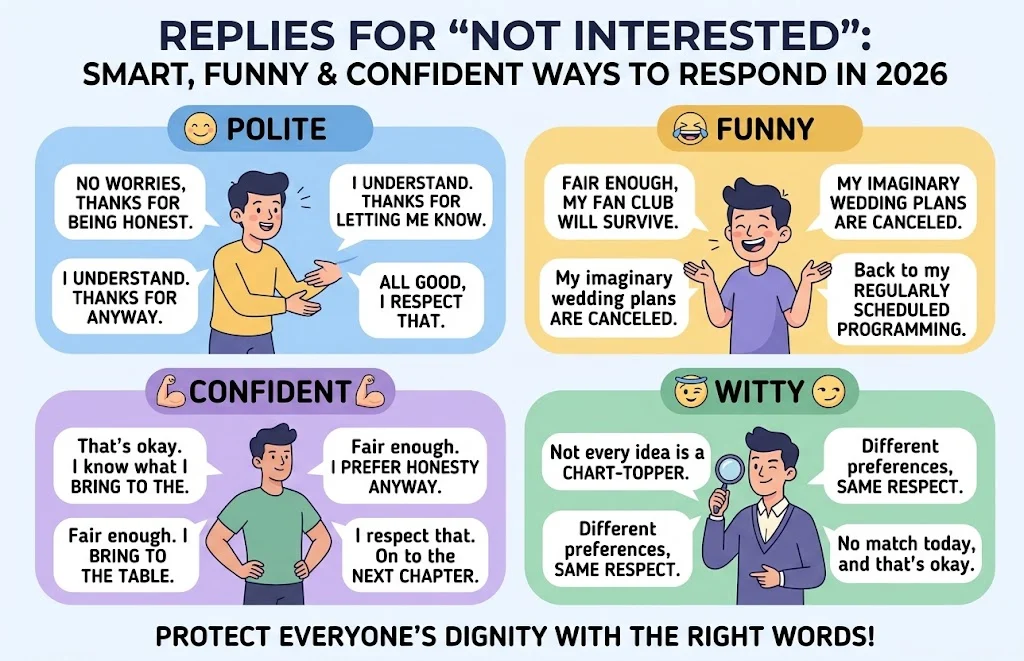
The best responses to “not interested” depend on who says it and how the conversation feels. You can respond politely, keep things light with humor, or confidently move on without making the situation awkward.
Few words can end a conversation faster than “not interested.” Maybe your crush says it after you confess your feelings, someone turns down your invitation, a friend rejects your suggestion, or a customer declines your offer in a professional setting.
The best responses to not interested depend on the situation, your relationship, and the impression you want to leave. Sometimes, a calm “No worries” shows more confidence than a clever comeback ever could. Other times, a little humor helps you save face and move forward.
1. Polite Responses to Not Interested
Polite replies are ideal when you want to respect someone’s decision and leave the conversation on good terms.
1. No worries, thanks for being honest.
Example: When someone politely turns down your romantic interest.
Meaning: You appreciate their honesty and accept their decision.
2. That’s completely fine. Take care!
Example: When someone declines your invitation.
Meaning: You are responding respectfully without creating pressure.
3. I understand. Thanks for letting me know.
Example: When someone rejects your suggestion or offer.
Meaning: You acknowledge their decision with maturity.
4. All good, I respect that.
Example: When a person says they do not want to pursue a relationship.
Meaning: You show that you respect their boundaries.
5. No problem at all.
Example: When a friend declines your plans.
Meaning: You keep the interaction relaxed and friendly.
6. Thanks for being straightforward with me.
Example: When someone clearly explains they are not interested in dating.
Meaning: You value clear communication.
7. That’s okay. I wish you the best.
Example: When you want to end a romantic conversation graciously.
Meaning: You accept the outcome and wish them well.
8. I appreciate you telling me directly.
Example: When someone gives you an honest answer instead of leaving you guessing.
Meaning: You acknowledge their directness positively.
9. Understood. No hard feelings.
Example: When someone declines an invitation or proposal.
Meaning: You want to make it clear that you are not holding a grudge.
10. That’s fair. Thanks anyway.
Example: When a potential customer declines your offer.
Meaning: You respond professionally without pushing further.
2. Funny Responses to Not Interested
Funny replies can make rejection feel less awkward when the other person enjoys humor. Keep the jokes light and avoid making someone feel guilty for saying no.
1. Fair enough, my fan club will survive.
Example: When a friend playfully rejects your invitation.
Meaning: You are using humor to keep things light.
2. Okay, I’ll inform the committee.
Example: When someone jokingly turns down your suggestion.
Meaning: You are exaggerating the rejection for comic effect.
3. My imaginary wedding plans are canceled.
Example: When your crush turns down your playful romantic hint.
Meaning: You are poking fun at your own overenthusiasm.
4. And there goes my five-minute love story.
Example: When someone declines your flirtatious message.
Meaning: You are making light of a brief romantic possibility.
5. Noted and filed under “fair enough.”
Example: When a friend rejects your idea.
Meaning: You are acknowledging their answer with a little humor.
6. Well, that was a short episode.
Example: When a conversation ends before it gets started.
Meaning: You are comparing the moment to a short TV episode.
7. My confidence has entered its commercial break.
Example: When you want to laugh off a minor rejection.
Meaning: You are joking about needing a moment to recover.
8. Okay, back to my regularly scheduled programming.
Example: When someone declines your invitation.
Meaning: You are playfully moving on with your day.
9. The plot has officially changed direction.
Example: When a romantic possibility doesn’t work out.
Meaning: You are framing the outcome as an unexpected story twist.
10. Well, at least I asked!
Example: When you want to acknowledge rejection without embarrassment.
Meaning: You are showing that you value trying, regardless of the result.
3. Confident Responses to Not Interested
Confidence means accepting the answer without chasing approval. These replies help you maintain self-respect while keeping the conversation calm.
1. That’s okay. I know what I bring to the table.
Example: When someone rejects your romantic interest.
Meaning: You are reminding yourself of your value without insulting the other person.
2. No problem. We all have our preferences.
Example: When someone says they are not attracted to you.
Meaning: You recognize that compatibility is personal.
3. Fair enough. I prefer honesty anyway.
Example: When someone directly declines your invitation.
Meaning: You show that clear communication matters to you.
4. I respect that. On to the next chapter.
Example: When you are ready to move on after rejection.
Meaning: You accept the outcome and focus on the future.
5. No hard feelings. I know what I deserve.
Example: When a romantic possibility does not work out.
Meaning: You maintain your self-respect without pressuring anyone.
6. That’s your choice, and I’m good with mine.
Example: When someone dismisses your offer or suggestion.
Meaning: You acknowledge their autonomy while standing by yourself.
7. All good. Compatibility goes both ways.
Example: When someone says they do not see a romantic connection.
Meaning: You recognize that mutual interest matters.
8. Thanks for clarifying. I’ll move accordingly.
Example: When someone makes their boundaries clear.
Meaning: You accept the information and adjust your actions.
9. No worries. I’m not here to convince anyone.
Example: When someone declines your romantic interest.
Meaning: You make it clear that you respect their freedom to choose.
10. I can accept a no without taking it personally.
Example: When you want to respond maturely to rejection.
Meaning: You show emotional confidence and perspective.
4. Sarcastic Responses to Not Interested
Sarcasm can work with friends or people who understand your humor. In romantic situations, avoid using it to punish someone for setting a boundary.
1. Breaking news: the feeling wasn’t mutual.
Example: When joking with a close friend about a minor rejection.
Meaning: You are treating the moment like a news announcement.
2. Well, there goes my imaginary acceptance speech.
Example: When someone turns down your playful suggestion.
Meaning: You are exaggerating your expectations for humor.
3. I’ll alert the group chat immediately.
Example: When a friend jokingly rejects your idea.
Meaning: You are making the situation sound like major news.
4. And just like that, the storyline changed.
Example: When a conversation takes an unexpected turn.
Meaning: You are framing the rejection as a plot twist.
5. My plans for world domination can continue, then.
Example: When a friend rejects your offer to team up on something silly.
Meaning: You are jokingly shifting your attention elsewhere.
6. Okay, the imaginary red carpet is closed.
Example: When someone turns down your playful flirting.
Meaning: You are using theatrical humor to move on.
7. Understood. The committee respects your decision.
Example: When someone declines an idea in a joking conversation.
Meaning: You are pretending the decision went through an official process.
8. My presentation was clearly not award-winning.
Example: When a friend rejects your attempt to persuade them to watch a movie.
Meaning: You are poking fun at your own pitch.
9. I’ll survive this shocking development.
Example: When you want to respond dramatically to a small rejection.
Meaning: You are exaggerating the emotional impact for humor.
10. Well, that saves me from planning the sequel.
Example: When a romantic conversation ends early.
Meaning: You are joking about avoiding future expectations.
5. Flirty Responses to Not Interested
Flirty replies are best when the conversation is playful and the person has not asked you to stop. If they clearly reject romantic attention, respect that answer and move on.
1. Fair enough. You’re still pretty cool, though.
Example: When someone playfully declines your compliment.
Meaning: You keep things warm without demanding a different response.
2. No worries. I’ll keep my charm in reserve.
Example: When your crush jokes that they are not interested.
Meaning: You respond playfully while leaving the decision alone.
3. All good. The flirting department is clocking out.
Example: When someone clearly says they do not want to flirt.
Meaning: You acknowledge their preference with humor.
4. Thanks for being honest. No awkwardness from my side.
Example: When someone you like says they do not feel the same way.
Meaning: You show maturity and remove pressure.
5. Fair enough. I hope someone makes you smile today.
Example: When you want to end a romantic conversation kindly.
Meaning: You express goodwill without expecting anything in return.
6. No worries. I can appreciate a clear answer.
Example: When your crush directly communicates their feelings.
Meaning: You show respect for honest communication.
7. Got it. I’ll keep things friendly.
Example: When someone wants to remain friends rather than date.
Meaning: You are clarifying that you will respect the boundary.
8. Understood. No more romantic plot twists from me.
Example: When someone turns down your flirtation.
Meaning: You use light humor to acknowledge their decision.
9. That’s fair. I hope we can keep things comfortable.
Example: When you share a class or workplace with someone you like.
Meaning: You want to maintain a respectful atmosphere.
10. Thanks for telling me. I won’t make it awkward.
Example: When someone rejects you but you still see each other regularly.
Meaning: You are reassuring them that you will behave respectfully.
6. Short and Casual Responses to Not Interested
When you do not want to overthink your reply, short messages can keep the situation simple and comfortable.
1. No worries!
Example: When someone declines a casual invitation.
Meaning: You show that you accept their answer.
2. Fair enough.
Example: When a friend rejects your suggestion.
Meaning: You acknowledge their point without arguing.
3. All good.
Example: When someone turns down your offer.
Meaning: You keep the conversation relaxed.
4. Got it.
Example: When someone makes their preference clear.
Meaning: You confirm that you understand.
5. That’s okay.
Example: When a person declines your invitation to hang out.
Meaning: You show acceptance without making a big deal of it.
6. Understood.
Example: When someone gives you a direct answer.
Meaning: You acknowledge the message clearly.
7. Thanks for telling me.
Example: When someone shares their honest feelings.
Meaning: You appreciate the clarity.
8. No problem at all.
Example: When a coworker declines your suggestion.
Meaning: You keep the interaction polite and easygoing.
9. That’s fair.
Example: When someone explains why they are not interested.
Meaning: You recognize their perspective.
10. Take care!
Example: When you want to end the exchange politely.
Meaning: You close the conversation on a friendly note.
11. I respect that.
Example: When someone sets a boundary.
Meaning: You acknowledge their choice.
12. Okay, thanks anyway.
Example: When someone declines a request or offer.
Meaning: You accept the answer and move on.
7. Professional Responses to Not Interested
Professional replies are useful when a customer, client, colleague, or business contact declines a proposal or offer.
1. Thank you for letting me know.
Example: When a potential client declines your service.
Meaning: You acknowledge their decision courteously.
2. I understand. Thank you for your time.
Example: When a business contact declines a meeting request.
Meaning: You end the exchange professionally.
3. No problem. Please feel free to reach out if your needs change.
Example: When a customer is not ready to purchase a service.
Meaning: You leave the door open without applying pressure.
4. I appreciate your consideration.
Example: When a company declines your proposal.
Meaning: You thank them for reviewing your offer.
5. Understood. I respect your decision.
Example: When a colleague rejects your recommendation.
Meaning: You acknowledge their choice respectfully.
6. Thank you for the clear response.
Example: When a client directly declines an invitation.
Meaning: You appreciate straightforward communication.
7. I understand this isn’t the right fit at the moment.
Example: When a potential partner declines a collaboration.
Meaning: You accept that the offer may not suit their needs.
8. Thank you for considering the opportunity.
Example: When someone declines a job or project offer.
Meaning: You show appreciation without challenging their decision.
9. I appreciate your honesty and wish you success.
Example: When a professional contact declines further discussions.
Meaning: You end the interaction graciously.
10. That’s completely understandable.
Example: When a customer explains why they do not need your product.
Meaning: You demonstrate empathy and professionalism.
8. Witty Responses to Not Interested
Witty replies are useful when you want to sound clever without being unkind. Choose one that fits the situation rather than forcing a punchline.
1. Not every idea is a chart-topper.
Example: When a friend rejects your music recommendation.
Meaning: You are acknowledging that tastes differ.
2. Fair enough, the audience has spoken.
Example: When a group declines your suggestion for an activity.
Meaning: You are humorously accepting the group’s decision.
3. Different tastes keep life interesting.
Example: When someone does not share your interests.
Meaning: You recognize that people naturally prefer different things.
4. No match today, and that’s okay.
Example: When a romantic connection does not develop.
Meaning: You accept the lack of compatibility.
5. The proposal has been respectfully declined.
Example: When a friend rejects your plan in a playful conversation.
Meaning: You are treating the answer like a formal decision.
6. I’ll file that under useful information.
Example: When someone explains what they do not want.
Meaning: You are acknowledging the feedback without taking offense.
7. Not every door is meant to open.
Example: When an opportunity does not work out.
Meaning: You are expressing acceptance and perspective.
8. The match wasn’t there, and that’s the answer.
Example: When someone does not feel a romantic connection.
Meaning: You recognize that mutual interest cannot be forced.
9. A clear no beats a confusing maybe.
Example: When someone directly declines your invitation.
Meaning: You value clarity over uncertainty.
10. Different directions, same planet.
Example: When a friend has different priorities from yours.
Meaning: You accept that people can want different things.
9. Responses to Not Interested From Your Crush
When your crush says they are not interested, the most attractive response is one that respects their feelings. You can be warm without trying to change their mind.
1. Thanks for being honest with me.
Example: When your crush tells you they do not feel the same way.
Meaning: You appreciate their directness.
2. I understand, and I respect your feelings.
Example: When you want to respond maturely to romantic rejection.
Meaning: You accept that their feelings are their own.
3. No worries. I’m glad I was honest about mine.
Example: When you have confessed your feelings and received a clear answer.
Meaning: You value your own honesty regardless of the outcome.
4. Thank you for telling me clearly.
Example: When your crush does not want to leave you guessing.
Meaning: You appreciate having clarity.
5. I won’t pressure you.
Example: When your crush says they do not want a relationship.
Meaning: You reassure them that you will respect their decision.
6. That’s okay. I wish you happiness.
Example: When you want to close the romantic conversation kindly.
Meaning: You express goodwill without expecting anything back.
7. I appreciate you being straightforward.
Example: When your crush gives you an honest answer.
Meaning: You value clear and respectful communication.
8. I understand. I’ll give you space.
Example: When your crush wants distance after the conversation.
Meaning: You show that you will respect their boundaries.
9. No hard feelings. I hope we can both move forward comfortably.
Example: When you will continue seeing each other socially.
Meaning: You aim to avoid unnecessary tension.
10. Thanks for being kind about it.
Example: When your crush turns you down gently.
Meaning: You acknowledge their consideration.
10. Responses to Not Interested From a Friend
Friendship can make rejection feel more personal, especially when a friend declines your plans or doesn’t share your interests. These replies keep things easygoing.
1. No worries, we’ll find something else to do.
Example: When your friend declines your suggested activity.
Meaning: You are flexible and open to other plans.
2. Fair enough, what would you prefer?
Example: When a friend isn’t interested in your choice of movie.
Meaning: You invite them to suggest an alternative.
3. That’s okay. We don’t have to like the same things.
Example: When your friend rejects your favorite hobby.
Meaning: You accept that different interests are normal.
4. All good, maybe another time.
Example: When a friend turns down an invitation to hang out.
Meaning: You leave the possibility open without applying pressure.
5. No stress. Thanks for telling me.
Example: When your friend declines your plans.
Meaning: You keep the friendship comfortable.
6. Your choice, friend.
Example: When a friend says they don’t want to join an activity.
Meaning: You acknowledge their independence.
7. Okay, let’s find something we both enjoy.
Example: When you and a friend disagree about weekend plans.
Meaning: You focus on finding common ground.
8. That’s fair. I won’t keep pushing it.
Example: When your friend has already declined a suggestion.
Meaning: You show that you respect their preference.
9. No problem, we can keep it simple.
Example: When your friend declines an elaborate plan.
Meaning: You suggest an easier alternative.
10. Thanks for being honest about what you want.
Example: When your friend tells you they would rather stay home.
Meaning: You appreciate their direct communication.
11. Mature Responses to Not Interested
Mature replies show emotional awareness and respect. They are especially useful when the subject is personal or the relationship matters.
1. Thank you for being clear with me.
Example: When someone communicates a difficult decision.
Meaning: You appreciate honesty and clarity.
2. I respect your feelings, even if they’re different from mine.
Example: When romantic interest is not mutual.
Meaning: You accept that two people can feel differently.
3. I appreciate the honesty, and I won’t take it out on you.
Example: When someone worries that rejection might cause an argument.
Meaning: You show emotional responsibility.
4. We don’t have to agree for me to respect your choice.
Example: When someone declines your proposal or suggestion.
Meaning: You separate personal preferences from respect.
5. I’m glad we can be honest with each other.
Example: When a close friend shares an uncomfortable truth.
Meaning: You value openness in the relationship.
6. I understand that your priorities are different.
Example: When someone declines an opportunity or invitation.
Meaning: You recognize that people have different needs.
7. I won’t ask you to justify your decision.
Example: When someone sets a clear personal boundary.
Meaning: You accept their answer without demanding an explanation.
8. Thank you for helping me understand where we stand.
Example: When a relationship conversation reaches a clear conclusion.
Meaning: You value clarity even when the answer disappoints you.
9. I can be disappointed and still respect your answer.
Example: When you want to be honest about your feelings without applying pressure.
Meaning: You acknowledge your emotions while respecting the other person.
10. Let’s leave things on respectful terms.
Example: When a personal or professional conversation is ending.
Meaning: You want to avoid unnecessary conflict.
12. Responses to Not Interested When Selling Something
When a customer declines a product or service, the best response is respectful, brief, and free from pressure.
1. No problem. Thank you for your time.
Example: When a customer declines your offer.
Meaning: You end the interaction professionally.
2. I understand. Have a great day!
Example: When someone says they do not need your service.
Meaning: You close the conversation courteously.
3. Thanks for letting me know.
Example: When a potential buyer declines your proposal.
Meaning: You acknowledge their decision.
4. Absolutely, I respect that.
Example: When a customer says the product is not right for them.
Meaning: You show respect for their preference.
5. No worries. I appreciate your consideration.
Example: When someone declines a sales presentation.
Meaning: You thank them without applying pressure.
6. Understood. I won’t take up any more of your time.
Example: When a customer wants to end the discussion.
Meaning: You respect their time and choice.
7. That’s completely fine.
Example: When a prospect says they are not interested.
Meaning: You accept the answer without argument.
8. Thank you for your honesty.
Example: When a potential client gives a direct rejection.
Meaning: You appreciate their straightforward response.
9. I understand this isn’t a priority right now.
Example: When a customer declines because they have other needs.
Meaning: You recognize that timing and priorities matter.
10. I’ll respect your decision and won’t follow up about this offer.
Example: When a prospect asks you not to contact them again about the product.
Meaning: You confirm that you will respect their request.
13. Responses to Not Interested Without Sounding Desperate
If you’re worried about appearing needy, choose replies that are brief, composed, and respectful. You do not need to prove your worth after someone declines.
1. Understood. Thanks for being clear.
Example: When someone declines a romantic invitation.
Meaning: You accept the answer without trying to change it.
2. No worries. I’ll leave it there.
Example: When a person says they do not want to continue the conversation.
Meaning: You show that you can respect the boundary.
3. Fair enough. Take care.
Example: When you want to end a dating conversation calmly.
Meaning: You close the exchange without seeking reassurance.
4. Thanks for letting me know.
Example: When someone turns down your proposal.
Meaning: You acknowledge the decision and move forward.
5. I respect that. No need to explain further.
Example: When someone declines and seems uncomfortable.
Meaning: You remove pressure to justify their choice.
6. All good. I wish you well.
Example: When a conversation reaches a clear ending.
Meaning: You show goodwill without prolonging the exchange.
7. I understand. I’ll move forward from here.
Example: When someone rejects your romantic interest.
Meaning: You communicate acceptance and independence.
8. That’s okay. We want different things.
Example: When your expectations do not match.
Meaning: You acknowledge the difference without blaming anyone.
9. No hard feelings.
Example: When you want to avoid unnecessary tension.
Meaning: You show that you are not holding resentment.
10. I appreciate the clarity.
Example: When someone gives you a definite answer.
Meaning: You value knowing where you stand.
14. Responses to Not Interested When You’re Hurt
Rejection can sting, even when you respect the other person’s decision. These replies let you be honest about your feelings without blaming or pressuring them.
1. I won’t pretend it doesn’t hurt, but I respect your choice.
Example: When someone you care about doesn’t feel the same way.
Meaning: You acknowledge your disappointment while accepting their answer.
2. Thanks for being honest, even though it’s difficult to hear.
Example: When a close friend or crush turns you down.
Meaning: You recognize the value of honesty despite the emotional impact.
3. I need a little time to process this, but I understand.
Example: When the rejection comes as a surprise.
Meaning: You communicate your emotional needs without asking them to change their mind.
4. I appreciate the truth. I’ll take some space if I need it.
Example: When you need distance to move forward.
Meaning: You express gratitude and establish a healthy boundary.
5. I’m disappointed, but I don’t blame you for how you feel.
Example: When your romantic feelings are not returned.
Meaning: You separate your sadness from the other person’s right to choose.
6. I care about you, and I respect your decision.
Example: When you have feelings for a friend who doesn’t feel the same way.
Meaning: You communicate affection without demanding reciprocation.
7. This isn’t the answer I hoped for, but I understand.
Example: When a relationship conversation ends differently than expected.
Meaning: You express disappointment with maturity.
8. I may need some time before things feel normal again.
Example: When you will continue seeing the person socially.
Meaning: You honestly communicate that healing may take time.
9. Thank you for not giving me false hope.
Example: When someone gives you a clear rejection.
Meaning: You appreciate knowing the truth rather than remaining uncertain.
10. I respect your feelings, and I’ll look after mine too.
Example: When you need to focus on your own emotional recovery.
Meaning: You recognize both their boundaries and your own needs.
15. Clever One-Liners to Respond to Not Interested
These short, memorable replies are useful when you want to acknowledge the answer without turning it into a long discussion.
1. Clear answer, clear next step.
Example: When someone directly declines your proposal.
Meaning: You recognize that clarity helps you move forward.
2. No match, no problem.
Example: When a romantic connection isn’t mutual.
Meaning: You accept that not everyone is compatible.
3. Different preferences, same respect.
Example: When someone disagrees with your suggestion.
Meaning: You recognize that differences do not require conflict.
4. Honesty received, respect returned.
Example: When someone communicates a difficult decision clearly.
Meaning: You respond to their honesty with maturity.
5. Noted, understood, moving forward.
Example: When you want a composed reply to rejection.
Meaning: You acknowledge the answer and focus on what comes next.
6. No pressure, no problem.
Example: When someone declines an invitation.
Meaning: You show that their decision is acceptable.
7. A clear no is enough.
Example: When someone worries about explaining their rejection.
Meaning: You confirm that they do not owe you a detailed justification.
8. Respect first, always.
Example: When a person establishes a personal boundary.
Meaning: You prioritize their comfort and autonomy.
9. Different paths can still lead to good things.
Example: When an opportunity or relationship does not work out.
Meaning: You remain open to other possibilities.
10. No hard feelings, just new directions.
Example: When you are ready to move on after rejection.
Meaning: You choose acceptance over resentment.
FAQs About Responses to Not Interested
What does “not interested” mean?
It usually means someone does not want to pursue an offer, activity, conversation, or relationship.
What is the best response to “not interested”?
Try “No worries, thanks for being honest” for a polite, respectful reply.
How should I respond when my crush says “not interested”?
Accept their answer, thank them for being honest, and avoid pressuring them to change their mind.
Can I give a flirty response to “not interested”?
Only if the exchange remains playful. If the rejection is clear, respect it and stop flirting.
How do I respond professionally to “not interested”?
Say, “Thank you for your time. I understand and respect your decision.”
What if I don’t mean “no hard feelings”?
You can simply say, “I understand. I need some time to process this.”
Is humor appropriate after rejection?
Yes, if the situation is light and both people are comfortable. Avoid jokes that shame or pressure someone.
How can I respond without sounding desperate?
Keep your reply brief, calm, and respectful. You do not need to justify yourself.
Conclusion
The best responses to “not interested” are the ones that fit your situation while protecting everyone’s dignity. A polite reply can preserve a good relationship, a witty line can ease an awkward moment, and a confident response can help you move forward without unnecessary drama.
If you’re dealing with a crush, remember that mutual interest matters more than finding the perfect comeback. In professional situations, courtesy and clarity are your best friends. Save your favorite lines, adapt them to your natural voice, and share this list with someone who needs a little help finding the right words. You can handle rejection with kindness, confidence, and a little humor when the moment allows