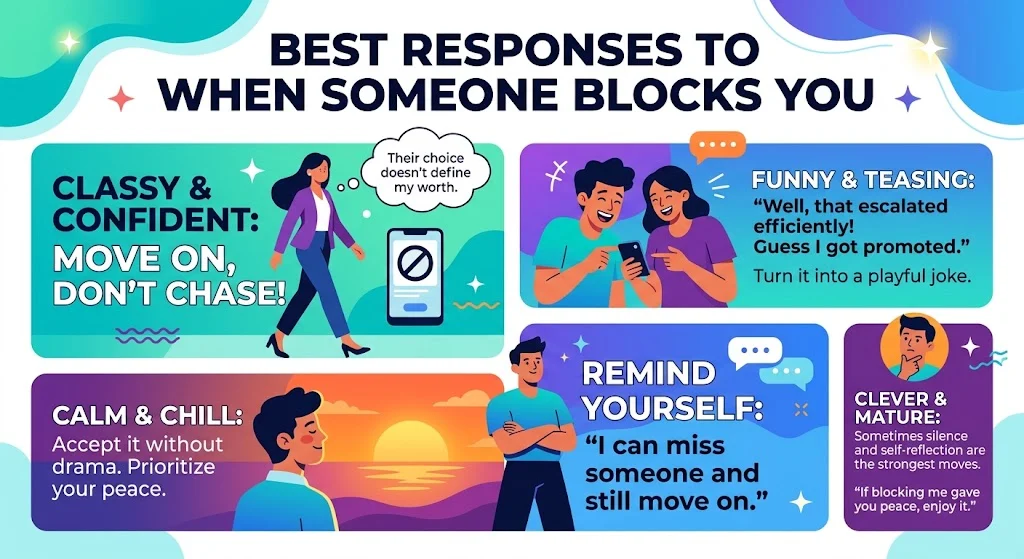
When someone blocks you, the best response depends on whether you want humor, closure, confidence, or simply peace. You do not always need to chase an explanation.
Top alternatives: “Guess that’s my cue to move on,” “Wishing you well,” “No hard feelings,” “That was unexpected,” “I’ll respect the distance.”
When someone blocks you, your first reaction might be confusion, irritation, or the classic “Wait… what just happened?” Whether it happens after a disagreement, a situationship, a friendship fallout, a work issue, or a random DM, knowing the best responses to when someone blocks you can help you handle the moment without losing your cool.
Sometimes you want a funny reply for your friends. Sometimes you want a classy response that closes the chapter. Other times, you may want something clever enough to make your point without starting another argument. And yes, there are moments when saying nothing is actually the strongest move.
The key is matching your response to the situation. A playful line can work with someone you know well, while a calm response is better when emotions are already high. Here are ready-to-send options for almost every mood.
Funny Responses
“Well, that escalated efficiently.”
Use this when you want to joke about how quickly things ended without sounding bitter.
Meaning: You are lightly acknowledging the sudden cutoff.
“Guess I got promoted to blocked.”
Use this with a friend who blocked you over something silly.
Meaning: You are turning the situation into a playful joke.
“Plot twist I definitely did not order.”
Use this when the block comes completely out of nowhere.
Meaning: You are surprised but choosing humor over frustration.
“And here I thought we were on speaking terms.”
Use this when the situation feels unnecessarily dramatic.
Meaning: You are playfully calling out the sudden distance.
“Well, my notifications just got quieter.”
Use this when you want a dry joke without being harsh.
Meaning: You are pretending the block is no big deal.
“Okay, mystery mode activated.”
Use this when you have no idea why they blocked you.
Meaning: You are treating the situation with curiosity and humor.
“That button really got some use today.”
Use this when someone blocked you after a minor disagreement.
Meaning: You are making light of their decision.
“I respect the dramatic exit.”
Use this when the block feels theatrical rather than serious.
Meaning: You are teasing the situation without directly attacking them.
“Well, that conversation had a surprise ending.”
Use this when things ended suddenly.
Meaning: You are amused by how abruptly communication stopped.
“Not the block button making a guest appearance.”
Use this for a playful social-media-style reaction.
Meaning: You are joking about the action itself.
“Okay then, enjoy your digital peace.”
Use this when you want a funny but harmless response.
Meaning: You are accepting the distance with humor.
“Guess we are taking a social media timeout.”
Use this when the situation is not deeply serious.
Meaning: You are framing the block as a temporary break.
Classy Responses
“I respect your decision. Take care.”
Use this when you want to end things without adding tension.
Meaning: You are showing maturity and respecting their boundary.
“No hard feelings. I wish you well.”
Use this when you want peaceful closure.
Meaning: You are choosing goodwill instead of resentment.
“I’ll respect the distance and move forward.”
Use this after a friendship or relationship ends.
Meaning: You are accepting the situation and focusing on yourself.
“I understand. Wishing you nothing but the best.”
Use this when you want a warm but final response.
Meaning: You are closing the chapter respectfully.
“Your choice is clear, and I respect it.”
Use this when you do not want to argue about the block.
Meaning: You are acknowledging their decision calmly.
“I hope everything works out for you.”
Use this when you want to leave the situation peacefully.
Meaning: You are ending contact without hostility.
“Sometimes distance is the answer. Take care.”
Use this when you feel closure is more useful than another conversation.
Meaning: You are accepting separation without bitterness.
“I won’t force a conversation you don’t want.”
Use this when you want to emphasize healthy boundaries.
Meaning: You are showing that you will not chase someone.
“I appreciate the clarity.”
Use this when the block finally confirms where things stand.
Meaning: You are treating the action as an answer.
“I’ll leave things where they are.”
Use this when you want a simple closing statement.
Meaning: You are choosing not to reopen the conflict.
“I hope we both find peace in moving on.”
Use this after an emotionally difficult situation.
Meaning: You are prioritizing peace and closure.
“Take care of yourself. I’ll do the same.”
Use this when you want a gentle final message.
Meaning: You are accepting the end while maintaining dignity.
Sarcastic Responses
“Very subtle.”
Use this when someone blocked you instead of explaining themselves.
Meaning: You are sarcastically pointing out how obvious their decision was.
“Well, that was one way to communicate.”
Use this when you think the block replaced an actual conversation.
Meaning: You are questioning their communication style.
“Excellent use of the block button.”
Use this when you want dry humor rather than anger.
Meaning: You are sarcastically acknowledging their choice.
“Communication skills: interesting approach.”
Use this when the situation ended without an explanation.
Meaning: You are criticizing the method without using harsh language.
“I see we chose the silent strategy.”
Use this when someone disappears after an argument.
Meaning: You are calling attention to the lack of communication.
“Well, that cleared things up… sort of.”
Use this when the block leaves you with more questions.
Meaning: You are highlighting the irony of the situation.
“A bold communication technique.”
Use this when you want a short sarcastic comeback.
Meaning: You are jokingly questioning the decision.
“Five stars for dramatic timing.”
Use this when the block happened at an especially awkward moment.
Meaning: You are poking fun at the timing.
“And here I thought words were still available.”
Use this when you believe a conversation could have solved things.
Meaning: You are sarcastically suggesting they could have talked.
“That certainly saved us some typing.”
Use this when you want understated sarcasm.
Meaning: You are making the block sound amusingly practical.
“Well, message received.”
Use this when you want sarcasm with a clear sense of closure.
Meaning: You understand the boundary and will not chase them.
“Understood. The digital door is closed.”
Use this when you want a dramatic but controlled sarcastic line.
Meaning: You recognize that communication has ended.
Confident Responses
“I’m not chasing someone who chose to leave.”
Use this when you want to remind yourself to protect your self-respect.
Meaning: You are choosing confidence over pursuit.
“Their decision does not define my worth.”
Use this after a block that genuinely hurts.
Meaning: You are separating someone’s action from your value.
“I can accept rejection without losing myself.”
Use this when you need a grounded response.
Meaning: You are showing emotional strength and self-awareness.
“I know when to step back.”
Use this when someone has clearly created distance.
Meaning: You are confident enough to respect boundaries.
“I don’t need access to someone to be okay.”
Use this when the block feels personal.
Meaning: You are emphasizing independence.
“I’ll take the hint and keep moving.”
Use this when you want a concise response.
Meaning: You understand the message and intend to move forward.
“I’m choosing peace over proving a point.”
Use this after a disagreement that could become bigger.
Meaning: You value calm more than winning.
“I won’t beg for a place in anyone’s life.”
Use this when you feel tempted to chase an explanation.
Meaning: You are protecting your dignity.
“Closure does not always require another conversation.”
Use this when someone has already cut off communication.
Meaning: You believe you can move forward without answers.
“I’m good with letting people make their choices.”
Use this when you want a mature confidence boost.
Meaning: You respect other people’s decisions without losing yourself.
“If they want distance, I can give them space.”
Use this when you want to respond without resentment.
Meaning: You are confident enough not to force contact.
“I’ll keep my energy where it is appreciated.”
Use this when you want a confident social-media-ready line.
Meaning: You are redirecting your attention toward healthier connections.
Chill And Casual Responses
“Okay, no worries.”
Use this when you do not want to make the situation bigger.
Meaning: You are calmly accepting what happened.
“All good. Take care.”
Use this when you want a short and peaceful ending.
Meaning: You are moving on without drama.
“Fair enough.”
Use this when you want to acknowledge their decision casually.
Meaning: You accept their choice without arguing.
“Got it. I’ll give you space.”
Use this when the block follows tension or conflict.
Meaning: You are respecting their boundary.
“No stress. Wishing you well.”
Use this when you want to stay friendly.
Meaning: You are ending things on a positive note.
“Okay, I understand.”
Use this when you want a neutral response.
Meaning: You are acknowledging the situation without escalating it.
“Guess that’s that.”
Use this when you want a simple, casual ending.
Meaning: You recognize that communication has stopped.
“No worries, life goes on.”
Use this when you want to sound relaxed.
Meaning: You are refusing to let the situation consume you.
“I’ll respect it.”
Use this when you want the shortest possible mature response.
Meaning: You are respecting the boundary.
“Hope things work out.”
Use this when you want to leave things peacefully.
Meaning: You are ending contact without hostility.
“Understood. Have a good one.”
Use this when you want to keep things polite and brief.
Meaning: You are closing the interaction calmly.
“Okay, we’ll leave it there.”
Use this when continuing the situation would be pointless.
Meaning: You are choosing closure.
Polite Responses
“I understand that you need some space.”
Use this when the person appears overwhelmed or upset.
Meaning: You are acknowledging their need for distance.
“I respect your boundaries.”
Use this when you want to respond with emotional maturity.
Meaning: You recognize their right to choose contact.
“I’m sorry things reached this point.”
Use this when the situation ended after a conflict.
Meaning: You regret the outcome without blaming them.
“I hope you’re doing okay.”
Use this when you still care despite the distance.
Meaning: You are expressing concern without demanding contact.
“I’ll respect your decision.”
Use this when you want a clear and courteous response.
Meaning: You accept what they have chosen.
“Thank you for the time we shared.”
Use this when a relationship or friendship has ended.
Meaning: You are recognizing the positive parts of the connection.
“I wish you well going forward.”
Use this when you want a graceful goodbye.
Meaning: You are offering goodwill while moving on.
“I understand. No explanation is necessary.”
Use this when you do not want to pressure them.
Meaning: You are accepting the boundary.
“I hope we can both move forward peacefully.”
Use this after a difficult disagreement.
Meaning: You want closure without additional conflict.
“I’ll give you the space you’re asking for.”
Use this when their actions clearly show they need distance.
Meaning: You are respecting their decision.
“I appreciate the honesty, even if it was difficult.”
Use this when the block followed a clear disagreement.
Meaning: You are focusing on acceptance rather than resentment.
“Take care, and I genuinely wish you the best.”
Use this when you want a warm final message.
Meaning: You are ending the connection respectfully.
Brutal Responses
“You blocked me, and I still have a life to live.”
Use this when you want a firm response without personal attacks.
Meaning: You are making it clear that you will continue moving forward.
“I noticed. I’m not losing sleep over it.”
Use this when you want to sound completely unfazed.
Meaning: You are saying the action does not control your emotions.
“If blocking me gave you peace, enjoy it.”
Use this when you want a firm but controlled comeback.
Meaning: You are giving them the distance they requested.
“You made your choice. I’ll make mine and move on.”
Use this after a relationship or friendship ends.
Meaning: You are taking control of your next step.
“No access, no problem.”
Use this as a short social-media-style comeback.
Meaning: You are saying you do not need continued contact.
“I won’t compete for someone’s attention.”
Use this when you feel the relationship became one-sided.
Meaning: You are refusing to chase validation.
“The block answered more than a paragraph could.”
Use this when you wanted clarity but received silence.
Meaning: You see the action as a final message.
“I’m not knocking on a door that was closed.”
Use this when you want a firm metaphorical response.
Meaning: You will not pursue someone who rejected contact.
“You chose distance. I chose peace.”
Use this when you want a memorable one-liner.
Meaning: You are turning the situation into an opportunity for calm.
“I can take a hint without taking it personally.”
Use this when you want confidence without hostility.
Meaning: You understand the boundary and refuse to be controlled by it.
“Blocking me changed your screen, not my life.”
Use this when you want a sharp but composed line.
Meaning: Their action has limited practical impact on you.
“No need to unblock me. I already understood.”
Use this when you want to make your position clear.
Meaning: You have accepted the situation and will not chase them.
Flirty Responses
“Blocking me already? I thought we were just getting interesting.”
Use this only when the relationship is playful and the block is not serious.
Meaning: You are teasing rather than expressing genuine hurt.
“Was that your way of keeping me mysterious?”
Use this when the person has a playful sense of humor.
Meaning: You are turning the situation into light flirtation.
“I guess I’ll leave the plot unresolved.”
Use this when the connection was casual and playful.
Meaning: You are joking about the unfinished interaction.
“That was a dramatic way to say you need a break.”
Use this when you know the person well enough for teasing.
Meaning: You are keeping the tone light.
“Okay, I’ll let you enjoy your little disappearing act.”
Use this when the situation is clearly playful.
Meaning: You are teasing their temporary absence.
“Should I take that as a very complicated hello?”
Use this when you want a playful interpretation.
Meaning: You are joking about the mixed signal.
“Well, that definitely made things interesting.”
Use this when you want a light response without pressure.
Meaning: You are treating the block as an unexpected twist.
“I’ll assume the mysterious era has begun.”
Use this when both people enjoy playful banter.
Meaning: You are joking rather than confronting them.
“Guess I’ll let you wonder what I would have said.”
Use this when the tone is teasing and mutual.
Meaning: You are playfully leaving the conversation unfinished.
“Blocking me was not on my bingo card.”
Use this when the situation feels unexpected but not serious.
Meaning: You are responding with humor and surprise.
“Okay, I’ll respect the dramatic pause.”
Use this when you expect the person may return later.
Meaning: You are teasing the temporary distance.
“If this is flirting, your technique needs work.”
Use this only when you already share playful chemistry.
Meaning: You are jokingly calling out the mixed signal.
Emotional Responses
“Honestly, that hurt more than I expected.”
Use this when you want to be vulnerable without blaming them.
Meaning: You are openly acknowledging your feelings.
“I wish we could have talked instead.”
Use this when the block ended a meaningful connection.
Meaning: You wanted communication rather than silence.
“I’m disappointed, but I’ll respect your decision.”
Use this when you need to express hurt calmly.
Meaning: You are being honest while respecting their boundary.
“I cared about this connection, so the ending is difficult.”
Use this when the relationship mattered deeply to you.
Meaning: You are explaining why the situation affects you.
“I may not understand it, but I accept it.”
Use this when you have unanswered questions.
Meaning: You are choosing acceptance despite uncertainty.
“I wish things had ended differently.”
Use this when you are grieving the loss of a connection.
Meaning: You are expressing sadness without attacking them.
“I needed clarity, but I’ll find my own closure.”
Use this when the block leaves you with unanswered questions.
Meaning: You are taking responsibility for your healing.
“It’s hard not to wonder what went wrong.”
Use this when the block feels sudden.
Meaning: You are acknowledging confusion and hurt.
“I hope someday this feels easier for both of us.”
Use this after an emotional relationship ending.
Meaning: You want peace rather than continued conflict.
“I’m hurt, but I don’t want to turn that into anger.”
Use this when you want to stay emotionally grounded.
Meaning: You are choosing healthy expression over retaliation.
“Some endings are painful even when they are necessary.”
Use this when you are trying to accept the situation.
Meaning: You recognize that separation can still hurt.
“I’ll remember the good without holding onto what ended.”
Use this when you want thoughtful closure.
Meaning: You are honoring the past while moving forward.
Sweet Responses
“I hope you find the peace you need.”
Use this when you want to respond with kindness.
Meaning: You are wishing them well despite the distance.
“No anger here. I genuinely wish you happiness.”
Use this when you want to end things warmly.
Meaning: You are choosing kindness instead of resentment.
“Thank you for the memories. Take care.”
Use this when a meaningful connection has ended.
Meaning: You are appreciating the past while saying goodbye.
“I hope life treats you kindly.”
Use this when you want a gentle final message.
Meaning: You are offering sincere goodwill.
“I’ll respect your space with no hard feelings.”
Use this when you want to reassure them.
Meaning: You are accepting the boundary peacefully.
“Wishing you better days ahead.”
Use this when the situation has been emotionally difficult.
Meaning: You want them to move forward positively.
“I hope you find what you’re looking for.”
Use this when you want a soft closing line.
Meaning: You are releasing the connection without resentment.
“Take the space you need. I’ll be okay.”
Use this when you want to show care and independence.
Meaning: You respect their choice while reassuring yourself.
“No need for bad blood.”
Use this when you want to prevent further hostility.
Meaning: You prefer peace over conflict.
“I’ll keep the good memories and let the rest go.”
Use this after a meaningful friendship or relationship.
Meaning: You are choosing forgiveness and forward movement.
“I hope you smile when you remember the good times.”
Use this when you want a sentimental goodbye.
Meaning: You want the relationship remembered warmly.
“Be well. I mean that sincerely.”
Use this when you want a short but heartfelt ending.
Meaning: You are offering genuine goodwill without reopening contact.
Clever Responses
“A block is still a form of communication, I suppose.”
Use this when you want a thoughtful response with a little wit.
Meaning: You recognize that their action communicated a boundary.
“Interesting way to close a chapter.”
Use this when the ending feels sudden.
Meaning: You are observing the situation without creating another argument.
“I guess silence can be an answer too.”
Use this when you have stopped expecting an explanation.
Meaning: You are accepting the lack of communication.
“Not every ending needs a sequel.”
Use this when you want a memorable closure line.
Meaning: You are saying the situation does not need to continue.
“Sometimes the clearest message has no words.”
Use this when the block made their position obvious.
Meaning: You understand the boundary without further explanation.
“I’ll let the action speak for itself.”
Use this when you want to avoid unnecessary discussion.
Meaning: You are refusing to overanalyze their decision.
“A closed door can still point you toward another path.”
Use this when you want an optimistic response.
Meaning: You are turning rejection into forward movement.
“I don’t need every answer to keep moving.”
Use this when you are working toward emotional closure.
Meaning: You are accepting uncertainty.
“Some conversations end before the final sentence.”
Use this when communication stopped abruptly.
Meaning: You recognize that not every ending is explained.
“I’ll take the message without rewriting it.”
Use this when you want to accept their boundary.
Meaning: You will not try to change what happened.
“The situation is clear enough for me.”
Use this when you want a concise and intelligent response.
Meaning: You understand that continued contact is unwanted.
“I’d rather leave with dignity than stay for an explanation.”
Use this when you are tempted to seek closure from them.
Meaning: You are prioritizing self-respect over answers.
Dramatic Responses
“And just like that, the chapter closes.”
Use this when you want a cinematic but playful reaction.
Meaning: You are treating the ending like a dramatic story moment.
“Well, that was an unexpected season finale.”
Use this when the block arrives after a long story.
Meaning: You are using humor to describe a sudden ending.
“The plot took a turn nobody requested.”
Use this when the situation surprises you.
Meaning: You are making the unexpected block sound theatrical.
“Cue the emotional background music.”
Use this when you are joking with close friends.
Meaning: You are playfully exaggerating the moment.
“And here we arrive at the final episode.”
Use this when the relationship appears finished.
Meaning: You are framing the situation as a conclusion.
“Well, that ending had zero warning.”
Use this when the block happens suddenly.
Meaning: You are emphasizing how unexpected it felt.
“The curtain has officially fallen.”
Use this when you want a dramatic closing line.
Meaning: You are acknowledging that the interaction has ended.
“What a beautifully confusing ending.”
Use this when you are unsure why it happened.
Meaning: You are mixing confusion with light humor.
“Apparently, this story needed a dramatic exit.”
Use this when the block feels theatrical.
Meaning: You are joking about the way things ended.
“And suddenly, silence became the main character.”
Use this when communication completely disappears.
Meaning: You are playfully describing the sudden quiet.
“Well, that chapter definitely had an ending.”
Use this when you want drama without hostility.
Meaning: You are acknowledging that the connection is over.
“I did not see that twist coming.”
Use this when you want a simple dramatic reaction.
Meaning: You are expressing surprise without attacking them.
Professional Responses
“Understood. I’ll respect your decision.”
Use this when the situation involves a colleague or professional contact.
Meaning: You are acknowledging their boundary professionally.
“Thank you for clarifying your position.”
Use this when communication has become formal or tense.
Meaning: You are accepting the situation without emotional language.
“I’ll respect your preference regarding future communication.”
Use this when workplace boundaries need to remain clear.
Meaning: You are confirming that you will not pursue further contact.
“Understood. I’ll keep future communication limited as appropriate.”
Use this when contact may still be necessary for work.
Meaning: You are separating personal issues from professional responsibilities.
“I acknowledge your decision and wish you well.”
Use this when you want a polished closing statement.
Meaning: You are ending the interaction respectfully.
“I’ll make sure to respect the boundary going forward.”
Use this when you want to prevent further misunderstanding.
Meaning: You are clearly agreeing to their request for distance.
“I understand. Thank you for letting me know.”
Use this when the situation needs a neutral professional tone.
Meaning: You are acknowledging the information without arguing.
“I’ll leave the matter here.”
Use this when continuing the discussion would not be productive.
Meaning: You are closing the issue professionally.
“I respect your decision and will not pursue further contact.”
Use this when you want a direct formal response.
Meaning: You are clearly confirming that you will give them space.
“I appreciate the clarity regarding communication.”
Use this when you want to keep emotions out of the situation.
Meaning: You are treating the boundary as useful information.
“Wishing you all the best in your future work.”
Use this when a professional relationship is ending.
Meaning: You are maintaining courtesy despite the situation.
“Understood. I’ll proceed accordingly.”
Use this when a concise workplace response is needed.
Meaning: You are confirming that you will adjust your actions accordingly.
Cute Responses
“Okay, I’ll be over here being harmless.”
Use this when the situation is playful rather than serious.
Meaning: You are making yourself sound adorably innocent.
“Well, somebody pressed the tiny dramatic button.”
Use this when joking with someone you know well.
Meaning: You are turning the block into a cute joke.
“I guess I’ll send my imaginary peace offering.”
Use this when you want playful softness.
Meaning: You are showing that you are not looking for a fight.
“Okay, I’ll give you your little bubble.”
Use this when you want to sound gentle and caring.
Meaning: You are agreeing to give them space.
“No worries, tiny emotional timeout accepted.”
Use this when the situation is not deeply serious.
Meaning: You are framing the distance as a temporary break.
“I’ll be rooting for your peaceful era.”
Use this when you want a sweet modern phrase.
Meaning: You are wishing them well without chasing them.
“Sending zero bad vibes your way.”
Use this when you want a cheerful response.
Meaning: You are choosing positivity over resentment.
“Okay, I’ll take the hint with a little smile.”
Use this when you want to sound lighthearted.
Meaning: You are accepting the situation without bitterness.
“Hope your day gets a little brighter.”
Use this when you still want to show kindness.
Meaning: You are offering warmth despite the distance.
“I’ll leave you to your peaceful little corner.”
Use this when you want a playful boundary-respecting response.
Meaning: You are giving them room without hostility.
“No tiny grudges from my side.”
Use this when you want to keep the mood gentle.
Meaning: You are saying you do not want resentment.
“Okay, sending you good energy from a respectful distance.”
Use this when you want a sweet closing line.
Meaning: You care while accepting the separation.
Short Responses
“Got it.”
Use this when you want the shortest possible acknowledgment.
Meaning: You understand the boundary.
“Understood.”
Use this when you want a calm and mature response.
Meaning: You accept what happened.
“Fair enough.”
Use this when you want a relaxed acknowledgment.
Meaning: You accept their choice without debate.
“No worries.”
Use this when you want to keep things light.
Meaning: You are not escalating the situation.
“Take care.”
Use this when you want a polite ending.
Meaning: You are closing the interaction respectfully.
“Message received.”
Use this when you want a slightly sharper response.
Meaning: You understand what their action communicates.
“I respect it.”
Use this when you want to show maturity.
Meaning: You accept their decision.
“All good.”
Use this when you want to sound casual.
Meaning: You are choosing not to make it bigger.
“Noted.”
Use this when you want a dry, concise response.
Meaning: You have registered what happened.
“I’ll give you space.”
Use this when you want to respect their boundary.
Meaning: You will not pursue further contact.
“Wishing you well.”
Use this when you want a graceful ending.
Meaning: You are leaving without hostility.
“I’ll move forward.”
Use this when you want a confident closing line.
Meaning: You are choosing to focus on what comes next.
Boundary-Respecting Responses
“I won’t contact you again. I respect your boundary.”
Use this when the person has clearly indicated they do not want contact.
Meaning: You are taking their boundary seriously.
“I understand that you want distance, and I’ll honor that.”
Use this when the situation needs a calm response.
Meaning: You are accepting their request without resistance.
“Your space is yours, and I’ll respect it.”
Use this when you want to sound thoughtful.
Meaning: You recognize their right to choose distance.
“I won’t try to get around the block.”
Use this when you want to make your respect for their decision clear.
Meaning: You will not bypass the boundary.
“I understand the message.”
Use this when you want to keep the response brief.
Meaning: You recognize that further contact is unwanted.
“I’ll leave you alone and wish you well.”
Use this when you want a final, peaceful statement.
Meaning: You are ending contact respectfully.
“I won’t ask someone else to speak for me.”
Use this when you want to avoid involving mutual friends.
Meaning: You are respecting the separation directly.
“I won’t create another account to contact you.”
Use this when you want to clearly acknowledge the boundary.
Meaning: You understand that the block should not be bypassed.
“No pressure, no chasing, no hard feelings.”
Use this when you want a memorable boundary-focused line.
Meaning: You are choosing acceptance instead of pursuit.
“I’ll respect the silence.”
Use this when no further communication is appropriate.
Meaning: You recognize silence as a boundary.
“You have the space you asked for.”
Use this when you want to reassure them.
Meaning: You are confirming that you will not interfere.
“I’ll take care of my side and leave yours alone.”
Use this when you want firm emotional boundaries.
Meaning: You are focusing on yourself rather than controlling their choice.
Self-Respect Responses
“I deserve communication that feels mutual.”
Use this when the situation reminds you of a one-sided connection.
Meaning: You are recognizing the value of balanced communication.
“I can miss someone and still move on.”
Use this when the block hurts but you want to stay grounded.
Meaning: Feelings do not have to stop you from moving forward.
“I don’t need an explanation to respect myself.”
Use this when you are struggling with unanswered questions.
Meaning: Your self-worth does not depend on their response.
“I’m allowed to choose peace too.”
Use this when you feel tempted to keep pursuing contact.
Meaning: You are giving yourself permission to step away.
“Someone leaving does not make me less valuable.”
Use this when the block triggers insecurity.
Meaning: You are separating rejection from self-worth.
“I won’t turn rejection into self-rejection.”
Use this when you need a powerful reminder.
Meaning: Someone’s decision does not define how you see yourself.
“I can respect their choice without abandoning myself.”
Use this when you want a balanced perspective.
Meaning: You can accept their boundary while caring for your own emotions.
“My peace matters too.”
Use this when the situation has become emotionally exhausting.
Meaning: You are prioritizing your well-being.
“I’m not going to beg for basic communication.”
Use this when you feel the relationship became unhealthy.
Meaning: You are setting a standard for how you want to be treated.
“I’ll grieve it, learn from it, and keep going.”
Use this when the connection was meaningful.
Meaning: You are allowing yourself to feel while still moving forward.
“I can care without chasing.”
Use this when you still have feelings for the person.
Meaning: Caring does not require ignoring their boundary.
“My next chapter does not need their permission.”
Use this when you want an empowering closing thought.
Meaning: You are taking ownership of your future.
FAQs
What does it mean when someone blocks you?
It usually means they do not want direct contact at that moment, but the reason depends on the situation.
Is being blocked always a sign that someone is angry?
No. People may block others for privacy, boundaries, conflict, or simply wanting distance.
What should I say if someone blocks me?
If contact is no longer possible, respecting the boundary is usually better than trying to force a response.
Is it okay to send a message through another account?
Usually no. Creating another account to bypass a block can ignore the other person’s boundary.
Can being blocked mean they still care?
It is possible, but a block alone cannot prove someone’s feelings or intentions.
What is a classy response to being blocked?
“I respect your decision. I wish you well.” is calm, mature, and clear.
Can I make a joke about being blocked?
Yes, if the situation is light and the relationship allows humor. Avoid jokes when emotions are serious.
What if I do not actually want to respond?
You do not have to. Sometimes silence and moving forward are the best response.
Is being blocked a form of rejection?
It can indicate a desire for distance, but the meaning depends on the context and relationship.
What if someone blocks me after an argument?
Give them space rather than escalating the disagreement through other channels.
What is a good response when someone unblocks you?
Keep it simple, such as “Hey, hope you’re doing okay,” unless there is a reason to discuss what happened.
Should I ask why they blocked me?
Only if they reopen communication and the conversation feels appropriate. Avoid demanding an explanation.
Conclusion
Getting blocked can sting, confuse you, or make you want to type a whole paragraph that belongs in the drafts folder. Take a breath first. The best response is the one that matches your situation without costing you your peace.
You can be funny, classy, confident, emotional, playful, or simply say nothing. Your response can shape how the entire situation feels afterward, so choose one that reflects the person you want to be, not just the emotion you feel in the moment.
Save these responses for the next unexpected block, share them with the friend who always has a digital plot twist, and reuse whichever line fits your mood. Sometimes the strongest reply is knowing when to send one and when to move on.